
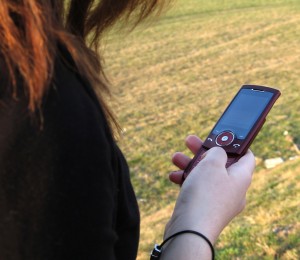

In an annual national survey, more than half of parents said they support the use of mobile devices for academic purposes inside their children’s classrooms and would even consider buying such a device for their children—while more than half of school administrators said they are not in favor of students using their own mobile devices in school.
This was just one of the significant findings contained in the 2010 Speak Up National Report, which polled students, parents, teachers, and administrators on their experiences and opinions regarding educational technology.
The survey revealed that students want more interactivity and collaboration in their studies, and parents are much more accepting of online learning than they were just a few years ago—but there are still many gaps in how students and their parents view educational technology and how educators view ed tech.
For example, the survey found that 67 percent of parents supported their child using mobile devices in the classroom for school work, while 65 percent of school administrators strongly objected to letting students use their own mobile devices in school.
“As parents are starting to use these emerging technologies themselves, they are gaining a greater appreciation for the potential they have to help increase their child’s productivity, as well as learning opportunities,” said Julie Evans, CEO of Project Tomorrow, which sponsors the Speak Up survey.
The Speak Up survey began in 2005 as a way for students to express their opinions on educational technology use in their schools, and the survey has evolved to cover new technologies as they emerge.
“Five years ago we asked students if they had an eMail address, and I would never ask that today,” Evans said.
In the fall of 2010, Project Tomorrow surveyed 294,399 K-12 students, 42,267 parents, 35,525 teachers, and several thousand librarians, school and district administrators, and technology leaders in 6,541 public and private school districts. The Speak Up surveys, conducted entirely online, included questions about the use of technology for learning, as well as online learning, mobile devices, and digital content.
The survey found a 42-percent increase over last year in the number of middle and high school students who own smart phones. What’s more, 53 percent of middle and high school students said the largest obstacle they face in using educational technology today is not being able to use their own cell phone, smart phone, or MP3 player for learning in school.
“The time to get serious about how to effectively leverage for learning all of this computing power in a student’s pocket or backpack is now,” Evans said. “Especially in these difficult fiscal times in schools, it just makes sense to tap into the devices that the kids already have and use them to increase productivity and learning, rather than just locking them up during the day.”
The survey also noted a major gain in parental support for online textbooks, which two-thirds of parents now view as a positive enhancement to education, up from 21 percent in 2008. Only about a quarter of middle school students and a third of high school students say they are currently using online textbooks, however, despite the growing support.
Evans said she was surprised by the prevalence of students who had participated in some form of online learning, whether through an entirely online class, a blended learning environment, or a self-study class.
“Five times more parents this year would choose online classes for their child’s ultimate school than in 2008,” she noted.
Students also expressed frustration with firewalls that block websites they need for schoolwork. Forty-eight percent of high school students and 44 percent of middle school students said they “know how to be safe and protect themselves when online,” and when asked the best way for schools to make it easier to use technology, the No. 1 response from students was that schools should allow greater access to the websites they need.
Students also said they want more opportunities to use technology for collaboration. Forty-six percent of high school students said they regularly leverage their social networking site to collaborate with classmates on school projects. Additionally, a quarter of both middle and high school students are using web tools such as Google Docs to write collaboratively with others—in most cases, outside of school.
With all of these opportunities to leverage technology for collaboration, “it should not be surprising … to learn that 51 percent of students in grades 6-8 and 44 percent of students in grades 9-12 say that working with other students on projects is the best way for them to learn science,” the report said.
A major discrepancy appeared in responses to the question, “Is your school doing a good job using technology to enhance learning and/or student achievement?” While 74 percent of high school teachers and 72 percent of high school principals said yes to this question, only 47 percent of high school students agreed.
“Our schools are still not meeting the needs of students in terms of using technology for learning—at least not in the eyes of the students who are the clients in this environment,” Evans said.
“We have much more work to do to more effectively leverage all of the emerging technologies to drive student achievement, and a good first place might be to tap into the ideas of the students directly,” she continued, nothing that this was the original motivation behind the Speak Up survey.
Another new trend that emerged in the survey responses was something that Evans called “parents as co-teachers”: A growing number of parents want access to digital curriculum tools for use with their children at home, to extend their children’s learning.
“Parents want more than just the school calendar on the [school’s] website,” Evans said. Or, as the report put it, “…Parents are increasingly leveraging technology to enable and empower their children’s educational destinies.”
Perhaps that’s why 52 percent of parents consider educational technology to be “extremely important” for their children’s success, compared with 37 percent of teachers.
- New film fights negative perception of teachers - September 16, 2011
- Textbook-free schools share experiences, insights - September 7, 2011
- Social websites are latest sources for plagiarized material - September 1, 2011
Comments are closed.