

The horizontal extension model
Horizontal extension can be useful when there are advantages with ensuring all students remain on the same topic, such as when all students must be assessed at the same time.
In horizontal extension, “fast” students have access to learning materials that broaden the current topic; they do not move on to a new topic. This wider understanding of the topic may take them into areas of greater complexity, and may contain learning materials that overlap with courses in future years of study. This may convey advantage in future courses, and this is acceptable as these future courses should also contain extension materials.
Analogy:
This can be thought of as taking a set of binoculars to the topic being studied to see beyond the sub-topic under consideration; to scan the horizon for related material.
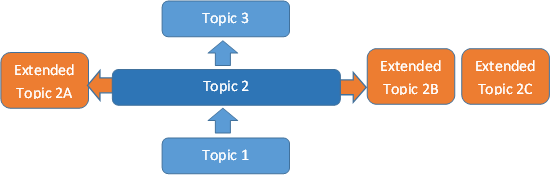
Example:
In Geography, students may study types of Coastal Landforms. They may learn about capes, coves, bays, etc. and the forces that create them (erosion and deposition).
Horizontal extension may take this topic “wider” to include mountain and glacial landforms (fjords, cirques, etc.), tectonic landforms (rift valleys, ocean trenches, fault scarps, etc.), volcanic landforms (calderas, volcanic cones, etc.) and impact landforms (impact craters, ejecta blankets, etc.). There are many more possibilities, and each topic in each discipline has similar horizontal extension topics.
Role of the teacher: In this model, the teacher must have produced/made available the extension materials; all of these extra materials need be complete and available to students at the beginning of the course. This may take time to plan, research and implement, and this extra preparation time must be allowed for.
Assessment when using this model can be taken by all members of the class at the same time, as all members of the class move from topic to topic at the same time; some students have simply studied the topic in greater detail.
- The traditional classroom works so why change it? - February 23, 2017
- Are outdated computers reverting students to a prehistoric era? - November 17, 2016
- Blended learning and the paradox of the experienced teacher - September 30, 2014
Comments are closed.