
SUBSCRIBE

Educators should be open to how students use technology, author Don Tapscott argues.
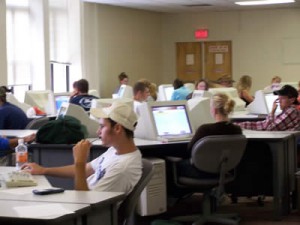
Educators should change the way they view technology’s role in everyday life in order to understand students’ educational needs, said Don Tapscott, chairman of nGenera Insight, during a Jan. 19 Consortium for School Networking webinar on the digital generation.
The nation is at a turning point, Tapscott said, and many institutions that have served us well for decades or even centuries—including education—have come to the end of their life cycle and must be “rebooted” or reinvented for a new age.
“This is an age where human communication is possible on a global basis,” he said.
Tapscott’s newest book, Grown Up Digital, looks at the so-called digital natives, some of whom are now college graduates, and how this generation is shaping education and the workforce. In 1998 he wrote Growing Up Digital, which examined this same group of students when they were K-12 students.
These digital natives are truly shaping the way technology is used and the things it is used for, he noted.
In 1998, “I noticed these kids were using the web differently than adults were—they were mainly using it for discussion or communication,” Tapscott said. “This is the true meaning of the internet—it’s not about presenting content or managing knowledge, it’s a new platform for communication and collaboration, for building communities.”
He added: “This is the Net Generation—computers, the internet, and technology shape it.”
The Baby Boomer generation tends to liken students’ continual internet use to excessive television watching, but the two are not necessarily the same thing, Tapscott said. The internet is not preventing kids from talking to their parents, doing their homework, or participating in extracurricular activities. If anything, he said, it takes away from TV time.
“Others think the digital age makes people stupid, that this generation is glued to the screen, is losing social skills, and is addicted to video games and the internet,” Tapscott said.
But in reality, today’s digital natives have made technology a natural and necessary part of their daily communication efforts, he said.
“This is the first time in history when children are an authority on something important. This digital revolution is changing every institution,” Tapscott said. And this, he added, has caused a generation “lap” instead of a generation gap, because kids are lapping parents on the digital track.
“This generation has a big problem—it’s us. The problem, to me, is older people who don’t ‘get it,’” Tapscott said.
“If someone was frozen 100 years ago and woke up today, they’d look around and they’d say the world has changed, and technology has been at the heart of these changes,” Tapscott said. “If they walked into many typical classrooms, they’d breathe a sigh of relief and say, ‘I recognize this.’”
You must be logged in to post a comment Login
nstrehlow
January 26, 2010 at 3:41 pm
Please do not lump all of us older people into the generation lap. I am proud to be a boomer and am also a cheerleader for making sure kids get access to what they need in school. I just want you to know that not all of us think this way. Many of the leaders in educational technology have been around the block more than a few times and we are using Facebook, SMART Boards, wikis, blogs, Web 2.0 and virtual worlds.
nstrehlow
January 26, 2010 at 3:41 pm
Please do not lump all of us older people into the generation lap. I am proud to be a boomer and am also a cheerleader for making sure kids get access to what they need in school. I just want you to know that not all of us think this way. Many of the leaders in educational technology have been around the block more than a few times and we are using Facebook, SMART Boards, wikis, blogs, Web 2.0 and virtual worlds.
maj
January 27, 2010 at 10:39 am
Although nstrehlow makes a valid point about not painting us older folks with the same brush, I do feel that many of us are still reluctant to embrace technology in the classroom. Part of the problem is access to the technology–many school boards do not provide computers for all students in every classroom–some classrooms are fortunate if they have one that works. Teachers need administrative and district support in providing up-to-date and working technology in the schools and more teachers need to stop relying on teaching methods that were used back in the day–lecture, seating arrangements by row and chalk and talk approaches. Unfortunately, there are still too many teachers who do not want to learn about using technology in the classroom. The article is a reminder that we can’t teach these digital natives the same way that we were taught years ago.
maj
January 27, 2010 at 10:39 am
Although nstrehlow makes a valid point about not painting us older folks with the same brush, I do feel that many of us are still reluctant to embrace technology in the classroom. Part of the problem is access to the technology–many school boards do not provide computers for all students in every classroom–some classrooms are fortunate if they have one that works. Teachers need administrative and district support in providing up-to-date and working technology in the schools and more teachers need to stop relying on teaching methods that were used back in the day–lecture, seating arrangements by row and chalk and talk approaches. Unfortunately, there are still too many teachers who do not want to learn about using technology in the classroom. The article is a reminder that we can’t teach these digital natives the same way that we were taught years ago.
rmidgley1
January 28, 2010 at 7:42 am
As someone who has “retired” but then started two educational software companies and is now surrounded by digital natives, I may have a slightly different perspective. Yes, I tweet extensively, hold weekly conference meetings on Skype, blog and email daily, occasionally use Facebook and LinkedIn, but I know I am not a digital native. We are developing serious games that teach scientific inquiry and critical thinking through evidence-based reasoning. What amazes me is not that my ideas are poor, but rather that the true digital native can expand on them in ways I had not considered and do so in a time frame that I cannot imagine. They start with a different perspective, bring different life experiences, and are not weighed down by the culture of conventional approaches with which I grew up. It feels like they come with different genes and an “I can do anything” attitude that is bounded by deliverable realism. Our game, DSI (http://dsihome.org), would have been very different if I had not given free reign to their ideas.
rmidgley1
January 28, 2010 at 7:42 am
As someone who has “retired” but then started two educational software companies and is now surrounded by digital natives, I may have a slightly different perspective. Yes, I tweet extensively, hold weekly conference meetings on Skype, blog and email daily, occasionally use Facebook and LinkedIn, but I know I am not a digital native. We are developing serious games that teach scientific inquiry and critical thinking through evidence-based reasoning. What amazes me is not that my ideas are poor, but rather that the true digital native can expand on them in ways I had not considered and do so in a time frame that I cannot imagine. They start with a different perspective, bring different life experiences, and are not weighed down by the culture of conventional approaches with which I grew up. It feels like they come with different genes and an “I can do anything” attitude that is bounded by deliverable realism. Our game, DSI (http://dsihome.org), would have been very different if I had not given free reign to their ideas.
jyv9382
February 21, 2010 at 10:01 pm
Jessica Vera says:
Technology is palying a big part in our lives. In order to prepare our young minds of the future we must indeed get them familiarized with the technology. At the pace the technology is going, who knows where it will be ten years from now. I guess for the older people who are not computer literate, we might try and offer free programs and classes to get them up to par.
jyv9382
February 21, 2010 at 10:01 pm
Jessica Vera says:
Technology is palying a big part in our lives. In order to prepare our young minds of the future we must indeed get them familiarized with the technology. At the pace the technology is going, who knows where it will be ten years from now. I guess for the older people who are not computer literate, we might try and offer free programs and classes to get them up to par.