
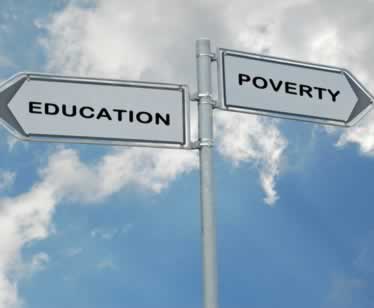
In 2008, there were about 8,123,000 children between the ages of 6 and 17 who lived in poverty, according to the Kids Count Data Center, a project of the Annie E. Casey Foundation. These are children who lived in a household with an annual income below $23,283 for a family of four.
That year, Title I funding was $13.9 billion, which works out to $1,711 for each K-12 student living in poverty.
By 2012, there were an estimated 10,345,000 U.S. children ages 6-17 living in poverty—a 27-percent increase in four years, thanks largely to the Great Recession. Yet Title I funding was $14.5 billion that year, an increase of only 4 percent during the same period.
That comes to just $1,403 for each K-12 student living in poverty, or an 18-percent decline in average per-child funding.
In 2013, schools lost 5.21 percent of their Title I funding to sequestration, or automatic, across-the-board cuts to federal programs. That lowered the program’s funding to less than $13.8 billion. In the 2014 budget enacted this month, Title I funding is back up to $14.4 billion … and yet, that’s still less money than schools received back in 2012.
Congress passed its 2014 budget just days after the 50th anniversary of Johnson’s War on Poverty. Today, when politicians discuss poverty, moral judgments often enter the picture—as if the poor are wholly responsible for their situation.
Whether you believe that or not—personally, I think it’s a simplistic view that fails to account for how our policies play a role in creating or erasing wealth—there is one thing everyone should agree on: Children are not at fault for growing up poor, and they all deserve an equal shot at success. And that starts with a good education.
When the scope of a challenge increases, the resources needed to meet this challenge must increase as well. In 2001, when the U.S. declared a war on terror, we didn’t cut funding for homeland security—we increased it by 300 percent in the decade that followed.
Yet, as the child poverty rate has ballooned in the last few years, our political will to combat this problem hasn’t responded in kind.
Please don’t tell me we can’t afford more funding for Title I, or that increasing our federal education spending will pass along more debt to our children. Budgets are a matter of priorities, and they reveal a lot about the values of our society. Closing the loopholes that allow large corporations to avoid paying U.S. taxes, for instance, would raise billions of dollars to offset any spending increases.
There are plenty of data suggesting that student achievement closely correlates with poverty. (See here and here, for starters.) As poverty rates increase, schools need more resources, not fewer, to help level the playing field and give our poorest students a chance to succeed.
Policy makers often discuss the need for school leaders to make “data-driven decisions” about what their students need. It’s about time they adopted this practice themselves when drafting the federal budget.

- ISTE launches four new initiatives to improve edtech experiences - June 30, 2025
- Study: AI detection software varies in effectiveness - June 3, 2025
- How will schools replace devices bought during the pandemic? - April 1, 2025