
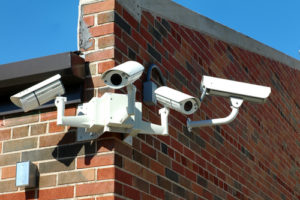
Baseline classroom security
There are different options for implementing that baseline, depending on budget, staffing capabilities and potential risk factors. Most importantly, when it comes to classroom security, it’s imperative that teachers and staff can lock doors promptly for their protection and that of students. In fact, it is becoming mandatory. States are beginning to be proactive in defining what it means to provide classroom security.
California, for example, established a law in 2011 (AB 211, Article 8.5) that requires classrooms and rooms with an occupant load of more than five people to be equipped with classroom security locks.
Available in both mechanical and electronic options, these locks retract via a latchbolt using a knob/lever from either side, unless the outside is locked by key from either side. When locked, the latchbolt retracts by a key outside or the knob/lever inside. An auxiliary latch deadlocks the latchbolt when the door is locked. The inside lever is always free for immediate egress.
According to Lori Greene, AHC/CDC, CCPR, FDAI, a codes expert at Allegion and author of idighardware.com, classroom security locks are ideal in the school environment because they do not impede egress. The door may be opened from the inside by simply turning the lever, even when the door is locked. The key cylinder on the inside is used to lock the outside lever only.
Additionally, because a key is required to lock the door, it prevents students and others who don’t have access to the key from locking the door. This is important to classroom safety because there’s actually a higher likelihood of student-on-student or student-on-teacher violence than that of an outside intruder. Consider the following:
- In 2010, there were approximately 828,000 nonfatal victimizations at schools among students 12 to 18 years of age.*
- Approximately 7 percent of teachers report that they have been threatened with injury or physically attacked by a student from their school.*
- In fact, it is about 30,000 times more likely that a student or staff will experience a non-fatal violent or seriously violent crime in school than will experience a fatal active assailant.*
In addition to classroom lockdown, classroom security locks help prevent disturbances in halls from expanding into the classroom, improve building security during afterhours use, secure contents during non-school hours and provide environmental consistency throughout a building.
(Next page: More classroom safety precautions)
- Classroom security: What you should (not) do - July 21, 2014