
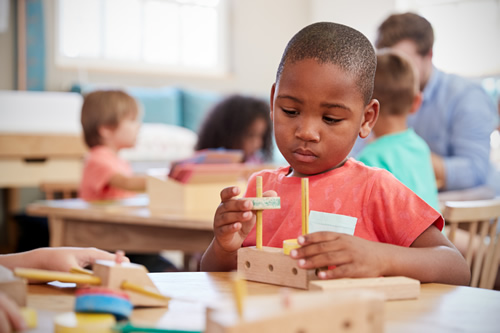
Teaching computer coding skills and concepts in the primary grades may sound like a challenge, but now there are hands-on activities and age-appropriate software that engage young students in this type of learning. And, starting the learning process in grades K-2 can build students’ confidence and reduce the challenges they face later when working on coding projects in the upper grades.
During a recent edWebinar, ways to develop early coding skills through playful learning were presented by Leanna Prater, Ed.D., a solution engineer at LEGO Education, and Jennifer Rodabaugh, a classroom teacher and developer of STEAM projects.
Related content: 5 ways to celebrate this year’s Hour of Code
Noting that 80 percent of future jobs will require STEAM skills, Dr. Prater pointed out that workers will also need problem-solving and critical-thinking skills, as well as the ability to collaborate and persevere–all of which can be integrated into inquiry projects that include hands-on activities. Dr. Prater also identified key characteristics of playful learning projects, which include the projects being meaningful, engaging, iterative, and socially interactive for young students.
- Beyond spotting deepfakes: Teaching multilingual learners to interrogate AI - August 25, 2026
- Financial education must not sacrifice student privacy - August 24, 2026
- Attendance is the scoreboard–connection is the game - August 21, 2026