
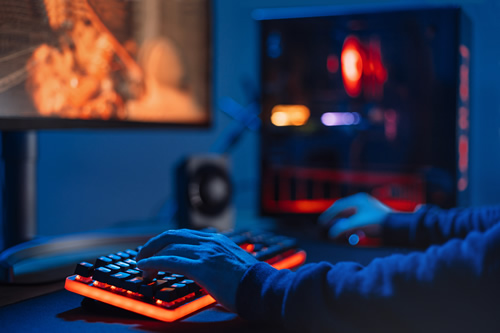
Halfway through the 12-week program, Lubiano says he has noticed a big difference in how students interact with each other and handle adversity within the game.
When the program first began, they didn’t know how to work well together as a team, and some students would get upset easily if their character died. Now, they communicate with each other regularly during game play, discussing strategy and what they should do as the game unfolds—and they’re able to control their emotions much more effectively.
“They build on each others’ ideas,” Lubiano says. “And they give out compliments to each other.”
The students themselves agree the program is making a difference.
“League of Legends can be a stressful game, but I’m learning how to stay calm and communicate with others,” says Angel, a senior. His teammate Elijah, also a senior, observes: “I’m building relationships and learning how to deal with different personalities. That’s something I’m going to have to do when I have a job some day.”
There have been some logistical hurdles to overcome while the school has remained closed during the pandemic. Some students don’t have a reliable broadband connection at home, Lubiano explains, while others don’t have a quiet place to log on for the duration of the two-hour program.
Still, those who have been able to participate regularly have seen clear benefits so far.
Aside from improved teamwork and communication skills, Lubiano has noticed that participants in the program have become more self-assured as well, and this confidence is carrying over to their academics.
“A student might rank himself low on a particular skill, but his teammates might rank him higher. That’s a big confidence booster,” he says. “These kids are becoming more vocal and advocating for themselves more, not just during game play but also in the classroom. I’ve noticed a few of them have been speaking up more often in class.”
Note: This post is the second in a series that will follow the 12-week program at Mann and report on its progress. You can read the first article here.
- Beyond spotting deepfakes: Teaching multilingual learners to interrogate AI - August 25, 2026
- Financial education must not sacrifice student privacy - August 24, 2026
- Attendance is the scoreboard–connection is the game - August 21, 2026