
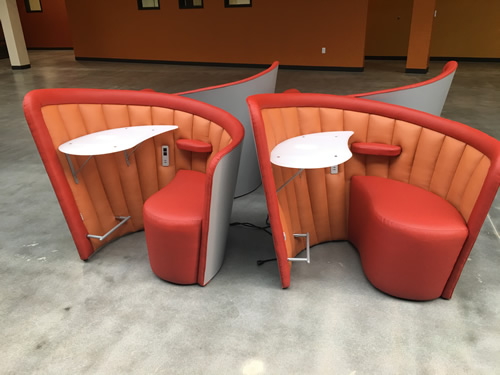
A one-size-fits-all approach to learning doesn’t suit today’s students, and the same can be said for schools and classrooms–learning spaces will increasingly need to become flexible, accommodating multiple learning styles to enable students to perform their best.
Educators often offer anecdotal evidence about the impact flexible learning spaces have on both teaching and learning, saying that both instruction and student engagement improves when spaces are modernized and designed for different learning preferences.
Flexible learning spaces lend themselves to more modern instructional approaches and meet various needs, such as small-group collaboration, large-group instruction, and individual study.
School leaders should consider the entire building, and not just classrooms. Is there comfortable seating for students working on longer assignments? Are there enough plugs and charging stations for student devices? Can desks and tables be rearranged to accommodate the needs of different size groups and different learning styles?

- Children learn best on paper: We need better technology, not less of it - July 13, 2026
- In districts, reaching readiness, retention, and success - March 5, 2026
- AI use is on the rise, but is guidance keeping pace? - January 2, 2026