
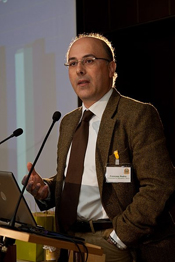
Karen Cator, director of education technology for the U.S. Department of Education, said finding a better way of teaching is a bigger issue than lack of funding.
“We need to build a more efficient way of teaching. Right now, there’s no incentive to do things any differently,” she said. “So we need to build a more cost-effective way of serving kids.”
Sasha Connors, an English teacher at Burlington County Institute of Technology in New Jersey, was able to find a cost-effective way to have her students interact with students in other countries by using iEARN to connect with other schools and Skype to hold IP-based calls.
“I had seen students form opinions based on what they see in the media. They had a limited knowledge of how the world works,” she said. “Web 2.0 allows students to interact with students from around the world. Skype allows meaningful global exchanges.”
She said that after interacting with their peers in places like India and Afghanistan, her students not only achieved a better understanding of those countries, but of themselves as Americans.
But she acknowledged that she was the only teacher at her school using Web 2.0 technologies to interact with the global community.
“Many teachers feel that technology can be used inappropriately by students. [Yet] building an interest in global connections and communication is very important,” she said.
Links:
Consortium for School Networking
Organization for Economic Cooperation and Development
- 3D equipment helps school lessons take on a whole new dimension - September 3, 2010
- IETF: AT&T’s net neutrality claim is ‘misleading’ - September 3, 2010
- To boost security, Facebook adds remote logout - September 3, 2010
Comments are closed.