
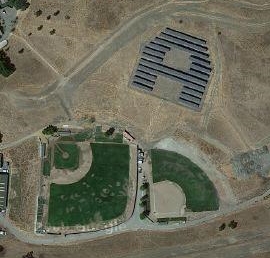
“Through this program, our participating schools will be able to significantly cut their energy bills without incurring any direct out-of-pocket expenses,” Chegwidden said.
Roughly 17 percent of the schools’ electricity requirements will come from the solar energy systems.
The program has been dubbed the “Morris Model,” and county officials said other school districts in the state have expressed interest in replicating the solar power installation.
Burton Valley Elementary School and Stanley Middle School in California’s Lafayette School District each installed 131-kilowatt solar power systems, which supply enough clean energy to reduce the schools’ energy bills by up to 60 percent.
In December, California’s Lafayette School District unveiled new solar systems at four schools under projects developed through two separate PPAs with Tioga Energy and Solar Monkey.
The systems at Burton Valley Elementary School and Stanley Middle School are provided through PPAs from Tioga Energy and Solar Monkey. Lafayette Middle School’s 76-kilowatt system and Springhill Elementary’s 100-kilowatt system are provided through PPAs directly from Solar Monkey.
All four rooftop installations combined will reduce the amount of electricity the district must purchase from its utility company by an estimated 40 to 60 percent.
Fred Brill, the district’s superintendent, said that schools are well-suited for solar power both in design and in the educational opportunities that solar power presents for students.
“Schools are an excellent place for solar,” he said. “Our electric rates, consumption patterns, and facilities are ideally suited to maximize the potential benefits solar can deliver. And by showing solar in action, schools educate the community and students about the benefits of this clean and renewable energy source.”
And schools are quick to realize the financial benefits of solar power, despite an often daunting initial cost.
“It’s the high upfront costs that have historically stood in the way of making solar a reality for schools,” Brill noted.
California’s Irvine Unified School District (IUSD) will partner with SPG Solar and SunEdison to install solar energy systems on 21 of its facilities, including schools and administrative buildings.
The solar program, which will be implemented throughout 2010, is expected to generate 6.6 million kilowatt-hours of clean renewable energy per year and save the district more than $17 million over 20 years.
Michael Parham, an IUSD board member, said he believes the decision to install solar not only will benefit the district financially, but will pave the way for educational opportunities as well.
“This could be one of the most valuable teaching tools we have in our schools,” Parham said. “We need sustainability in our schools, not just on our roofs or in our recycling programs, but in our classrooms, too. That is why, as good as this solar energy program will be, what we will be doing to use solar energy to teach our kids about math, science, business, finance, and art will be even more important.”
When the project is completed, more than 44 percent of electricity for the 21 sites should be generated by solar power. This is expected to reduce IUSD’s total energy costs by approximately 10 percent each year. Environmental Protection Agency estimates note that IUSD’s solar systems will prevent nearly 127 million pounds of carbon dioxide from being released into the atmosphere over the next 20 years—equivalent to removing 12,000 cars from California roads per year.

- Children learn best on paper: We need better technology, not less of it - July 13, 2026
- In districts, reaching readiness, retention, and success - March 5, 2026
- AI use is on the rise, but is guidance keeping pace? - January 2, 2026
Comments are closed.