
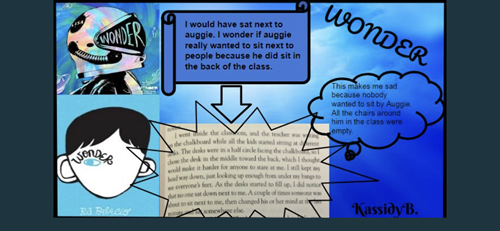
I like to do book snaps with my students, which I found on Twitter through Tara Martin, the author of a book called Be Real. To do a book snap, students take a snippet of a book page, and they can include emojis, the page number, the name of the book, and the cover. Then they write a little blurb and we tweet that out.
Kids really like having a global audience, knowing that someone is going to come back and share or comment on their work, and of course their parents like seeing what their kids are reading.


3. Using nudges before small issues become big
To keep parents in-the-know about their child’s day-to-day behavior, I’ve found it works best to send a quick instant message in an app like Bloomz. For example, a student in my class has anger issues. To help the student’s parents from worrying too much, I’ll send them a message saying the student had a great day. If something went wrong, I’ll say, “This behavior happened and I need to discuss it with you. Can we have a phone conference this afternoon?” That way, they’re up to speed on their child’s behavior and performance. This direct line also gives me a very quick, lower-level intervention that doesn’t require the attention of school administration.
Focusing on the positive
When it comes to communication, there’s always room for improvement. In class, I focus a lot on cultivating a positive environment. I like to write encouraging letters and leave them on students’ desks for them to see when they arrive. I send home post cards, and I continue to send home handwritten messages for parents as well. Each week, I give myself a goal of reaching out to five parents to share something positive that their child did that day.
Related: 7 ways to rethink school/family partnerships
As the saying goes, it takes a village to raise a child. When educators and parents work together, they can create a positive environment for every student’s success, which begins at home and expands in the classroom.
- From reactive to ready: How centralized facilities data drives smarter capital planning - November 25, 2026
- Principal burnout looks different in the leaders who stayed - November 24, 2026
- Why sustainable school mental health support requires bridging education and healthcare - November 23, 2026