

Specifically, Latitude looked to answer three main questions:
- What does the next generation of digital natives expect and desire from technology, and how does this differ across world regions?
- How can we engage children as authors and inventors of future technology, not just passive recipients?
- How can young minds help companies develop unexpected content and technology experiences that resonate with people of all ages?
Researchers scored the kids’ drawings on the presence of specific technology themes, such as type of interface, degree of interactivity, physical-digital convergence, and user’s desired end-goal. (More about the methodology can be found in the study.)
“This study is part of our larger research initiative that gives children a real voice in the broader, often very adult, discussion of future technologies,” says Steve Mushkin, founder and president of Latitude, in a statement. “Across a variety of creative exercises, kids from all over the world have proven, time and again, that they think in extraordinarily sophisticated ways about how tech could enhance their learning, play, and interactions with the people and things around them—and the ways that technology might help us solve the big global problems we all face.”
From the drawings of babes
Overall, study participants imagined technologies that are just beginning to appear in tech-forward circles, says the study, such as Google’s revamped image search, announced on June 14, which allows users to place images, rather than text, in Google’s search box to perform a search.
Here are some other features of technology kids say they’d like to see:
- 3D effects
- Ability to teach/create—The internet can host classes, and computers can allow for game creation and other types of creation.
- Intuitive interface: verbal/auditory controls, human-level responses, and an idea of the device as merely an extension of oneself.
- No “online” and “offline” distinction—Technology is no longer something that mediates experience, but something that pervades it. For example, computers that print real food or that allow the user to touch objects on the screen.
- Social communication functions
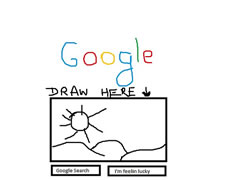
“For many kids, the ‘online’ versus ‘offline’ and ‘virtual’ versus ‘real’ distinctions are quickly disappearing,” says Mushkin. “They naturally think about a future in which traditionally ‘online’ interactions make their way into the physical world, and vice versa—a concept already playing out in augmented reality, transmedia storytelling, the Internet of Things, and other recent tech developments.”
Perhaps even more interesting is how kids’ desires differ in different parts of the world.

- #4: 25 education trends for 2018 - December 26, 2018
- Video of the Week: Dealing with digital distraction in the classroom - February 23, 2018
- Secrets from the library lines: 5 ways schools can boost digital engagement - January 2, 2018
Comments are closed.