
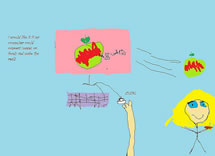
For example, children in the U.S., Europe, and Australia have greater interest in the process of interactivity itself rather than any real-world outcomes, meaning more game-playing and conversing with the computer.
Children in Africa and South Asia, however, tended to focus on technologies with a clear outcomes or tangible benefit to the user, such as a “device that provides homework help, a software that assists the user in creating more true-to-life drawings, or a vehicle that helps one get from point A to point B quickly,” says the report.
Also, children in Africa, South Asia, and Latin America were more likely to anthropomorphize computers, or imagine them as friends or teachers that could share their experiences or help in the accomplishment of a goal.
According to the report, 74 percent of kids in those regions envisioned technologies that aided with real-world tasks or abilities, such as cleaning one’s room or learning ballet.
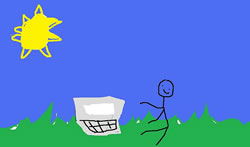
“Kids are asking for computers to look, feel, sound, act–and interact—more like humans,” says Jessica Reinis, a senior research analyst at Latitude who led the study and who specializes in creative methodologies for researching with children. “In many cases, it’s not enough to have a machine that simply completes a task for them; kids today have a strong bent towards independent learning, creation and artistic endeavors, and they’re looking for technologies that can teach them and really engage them in new ways.”
Where to go from here
According to Latitude, the idea of robots as teachers, software than teaches gaming creation, and activities online that can change the world aren’t so far-fetched.
For example, MIT’s Scratch is a programming language that allows kids to produce their own interactive content and games, and share their creations with others.

- #4: 25 education trends for 2018 - December 26, 2018
- Video of the Week: Dealing with digital distraction in the classroom - February 23, 2018
- Secrets from the library lines: 5 ways schools can boost digital engagement - January 2, 2018
Comments are closed.