
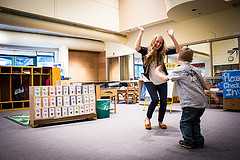
Self-regulation intervention boosts school readiness of at-risk children
An intervention that uses music and games to help preschoolers learn self-regulation skills is helping prepare at-risk children for kindergarten, a new study from Oregon State University shows.
Self-regulation skills–the skills that help children pay attention, follow directions, stay on task and persist through difficulty–are critical to a child’s success in kindergarten and beyond, said OSU’s Megan McClelland, a nationally recognized expert in child development and a co-author of the new study.
“Most children do just fine in the transition to kindergarten, but 20 to 25 percent of them experience difficulties–those difficulties have a lot to do with self-regulation,” McClelland said. “Any intervention you can develop to make that transition easier can be beneficial.”
(Next page: More details from the study)

- Children learn best on paper: We need better technology, not less of it - July 13, 2026
- In districts, reaching readiness, retention, and success - March 5, 2026
- AI use is on the rise, but is guidance keeping pace? - January 2, 2026