
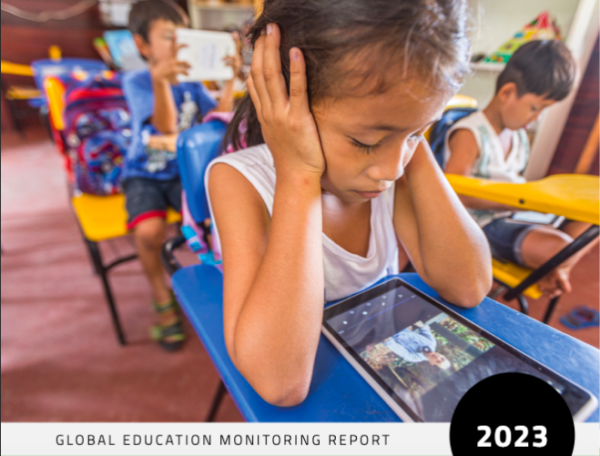
Many countries ignore the long-term costs of technology purchases and the EdTech market is expanding while basic education needs remain unmet. The cost of moving to basic digital learning in low-income countries and connecting all schools to the internet in lower-middle-income countries would add 50% to their current financing gap for achieving national SDG 4 targets. A full digital transformation of education with internet connectivity in schools and homes would cost over a billion dollars per day just to operate.
Is it sustainable?
The fast pace of change in technology is putting strain on education systems to adapt. Digital literacy and critical thinking are increasingly important, particularly with the growth of generative AI. Additional data attached to the report show that this adaptation movement has begun: 54% of surveyed countries have defined the skills they want to develop for the future. But only 11 out of 51 governments surveyed have curricula for AI.
In addition to these skills, basic literacy should not be overlooked, as it is critical for digital application too: students with better reading skills are far less likely to be duped by phishing emails.
Moreover, teachers also need appropriate training yet only half of countries currently have standards for developing their ICT skills. Few teacher training programmes cover cybersecurity even though 5% of ransomware attacks target education.
Sustainability also requires better guaranteeing the rights of technology users. Today, only 16% of countries guarantee data privacy in education by law. One analysis found that 89% of 163 education technology products could survey children. Further, 39 of 42 governments providing online education during the pandemic fostered uses that ‘risked or infringed’ on children’s rights.
Common Sense Media, the nation’s leading kids and technology nonprofit, announced plans to develop an in-depth AI ratings and reviews system that will assess AI products on a number of dimensions including responsible AI practices and suitability for children, with a special focus on products that are used by kids and educators.
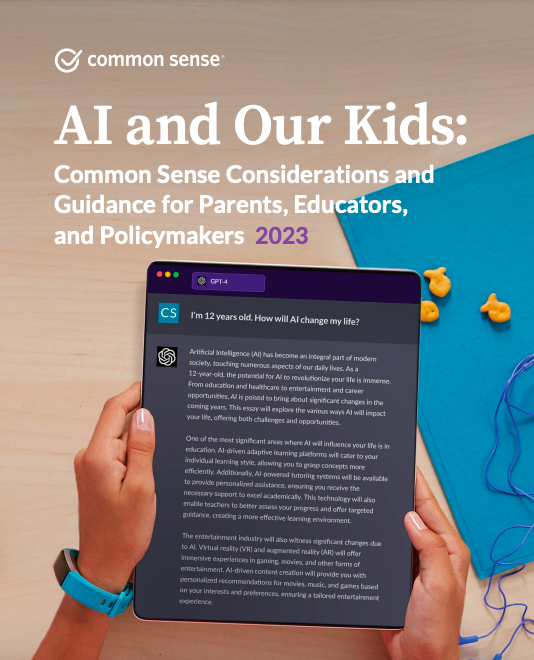
According to a recent poll from Common Sense Media and Impact Research, there is an overwhelming desire among parents (82%) for a rating system that will help them evaluate the quality of AI programs like ChatGPT. Over three-quarters of parents surveyed say they are interested in AI-powered education tools that help their children learn (77%), but only 40% say they know of a reliable source of information that they can use to learn about AI’s appropriateness for kids.

- eSchool News Live @InstructureCon25 - July 23, 2025
- ISTE25 Takeaways—BBC Studios Launches Free Global Education Platform to Support Teachers, Students, and Families - July 23, 2025
- ISTE25 Takeaways—Bloomz Unveils Immersive Translation and Conversational AI to Simplify and Strengthen the School-Home Connection - July 22, 2025