
We first began using the software with seventh and eighth grade students identified at the Below Basic level in language arts and mathematics on the South Carolina Palmetto Achievement Challenge Test (PACT). As part of their daily schedule, students visit the Classworks Lab for one 45-minute period, in place of one of their two elective classes. Students work on language arts one day and math the next, alternating each day.
We quickly saw a key benefit in that the software automatically builds a program around each child’s needs, based on the South Carolina state standards, to help each child move to the next level. This is crucial at the middle school level, where a teacher may teach 100 students throughout the day. If a teacher has students who are behind in reading and math, it is difficult to carve out time to address their needs. By adding individualized instruction during an additional class period, we can provide remediation without sacrificing regular class time spent on grade-level standards. We also import students’ MAP scores into Classworks, which automatically creates individualized learning paths for each student, based on his or her own scores.
Further, because the software offers interactive instruction through a multi-sensory approach–including voice, pop-up text, audio support, video, photographs, artist drawings, and animated clips–students are engaged. With different activities from different publishers, students can encounter a subject from varied perspectives and learning styles, which helps to keep their attention.
In 2009, we expanded our implementation to include sixth graders identified as needing extra help, based upon their fall 2008 MAP scores.
Using the software’s reporting system, lab manager George Goings regularly monitors students’ progress. Looking at the data, he can easily determine if students are engaged or just going through the motions. If a student is not applying himself, he and the student discuss how to get back on track.
Motivating students every day
To motivate students to work hard every day, Bell Street Middle School implements an incentive program with rewards for students who score 90 percent or higher on a selected number of lessons in the software. The incentives help students become more goal-oriented and recognize them for academic achievement. Many of these students have never been recognized for academic accomplishments. This recognition is rewarding to the students and their families.
On a monthly basis, Goings runs a report that details the number of units each student has mastered in the software. Student progress is charted on class spreadsheets that are displayed on bulletin boards in the lab and hall. After mastering a selected number of lessons, students are eligible for prizes such as restaurant gift certificates, ear buds, T-shirts, and a year-end drawing for MP3 players.
Incentive distribution days are a big hit with students. Several of these days are filmed by the school news crew and shown during the morning homeroom broadcast. As a result, students receive praise for their accomplishments from their classmates and students and teachers across the school.
Achieving gains
This incentive program has been a success in that it has students scoring higher on their MAP tests. In fact, some students did so much better they were able to choose another elective in place of Classworks Lab for the next semester.
In English/language arts in grades six through eight, 75 percent of students increased their MAP test scores from fall to spring by 5 points or more, 39 percent increased by 10 points or more, 13 percent increased by 15 points or more, and 4 percent increased by 20 points or more.
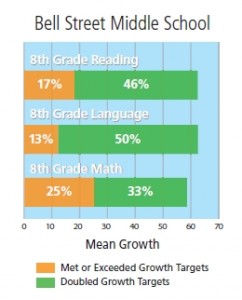
Several students met their MAP on-grade level expected growth targets in every grade and subject; some for the first time. In many cases, students’ growth more than doubled the expected growth targets. In eighth grade, for example, more than one-third of students doubled their expected growth targets in every subject.
Students’ MAP gains were also evident in fall 2008 PACT scores, as the number of seventh graders performing Below Basic dropped from 45 percent to 36 percent in English language arts, and from 32 percent to 27 percent in math.

- Children learn best on paper: We need better technology, not less of it - July 13, 2026
- In districts, reaching readiness, retention, and success - March 5, 2026
- AI use is on the rise, but is guidance keeping pace? - January 2, 2026