
Tip 2: Start small–and start with what you have
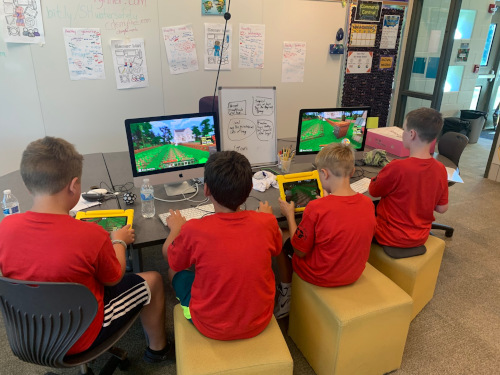
I attribute the success of our elementary esports program to what we learned during that camp. Students were surprisingly receptive to conversations around balancing media habits (including video game play) because we connected it to recess. We connected what we learned in science explorations to Minecraft, even developing our own aquaponics systems in Minecraft to compare them to crops that received water alone.
A trial run such as a summer camp or afterschool event (such as an Hour of Code family night) is a great way to determine viability of a more extensive program. Minecraft: Education Edition is a great title to start with. The controls teachers had, a wide variety of content and worlds, and Minecraft’s “low threshold but infinite ceiling” (as Microsoft says) made it a title that was accessible to nearly every student. It could also run on almost every platform, and both PCs and mobile devices.
Tip 3: Embed esports into existing curriculum
Esports can be a standalone unit (or class), however, collaborative gameplay, mindfulness, team building, and reflection are practices that can be embedded in countless curricular units. Esports worlds such as NASEF’s Farmcraft 2021 and 2022, NASEF and AEOP’s Junior Solar Sprint, and Random House’s League of Literacy are just a few examples of the possibilities of embedding esports and Minecraft: Education Edition into existing curricula. I redesigned digital citizenship lessons to provide ample opportunities for students to interact with one another in a digital environment at the same time as they worked collaboratively IRL (in real life).
Rather than a standalone lesson, we co-constructed classroom expectations to extend how we treat each other to include interactions in digital environments. I now observe fewer instances of rage quitting (leaving games angry), tilting (emotional dysregulation), and griefing (playing in a way that affects others’ gameplay and enjoyment in a negative way). We followed a very basic principle: video games are for everyone.
Tip 4: Make it authentic
The worst activity in school is the “experiment” where every student follows the same steps and the teacher already knows the answer. That’s not authentic learning.
Esports affords us an incredible opportunity to learn with and from our students. As teachers, we can facilitate learning and help students find the language to describe what they observe, learn, and wonder. Students, in return, can share their expertise of video games with their teacher and each other. Maya Angelou said, “The sum of us is greater than all our parts.” Some of the most memorable learning moments arise from a question and the response, “I don’t know, but let’s find out together.” Don’t be afraid to jump into esports without knowing all of the answers. There is nothing wrong with adjusting plans and going on “side quests” with students.
Tip 5: Be intentionally inclusive
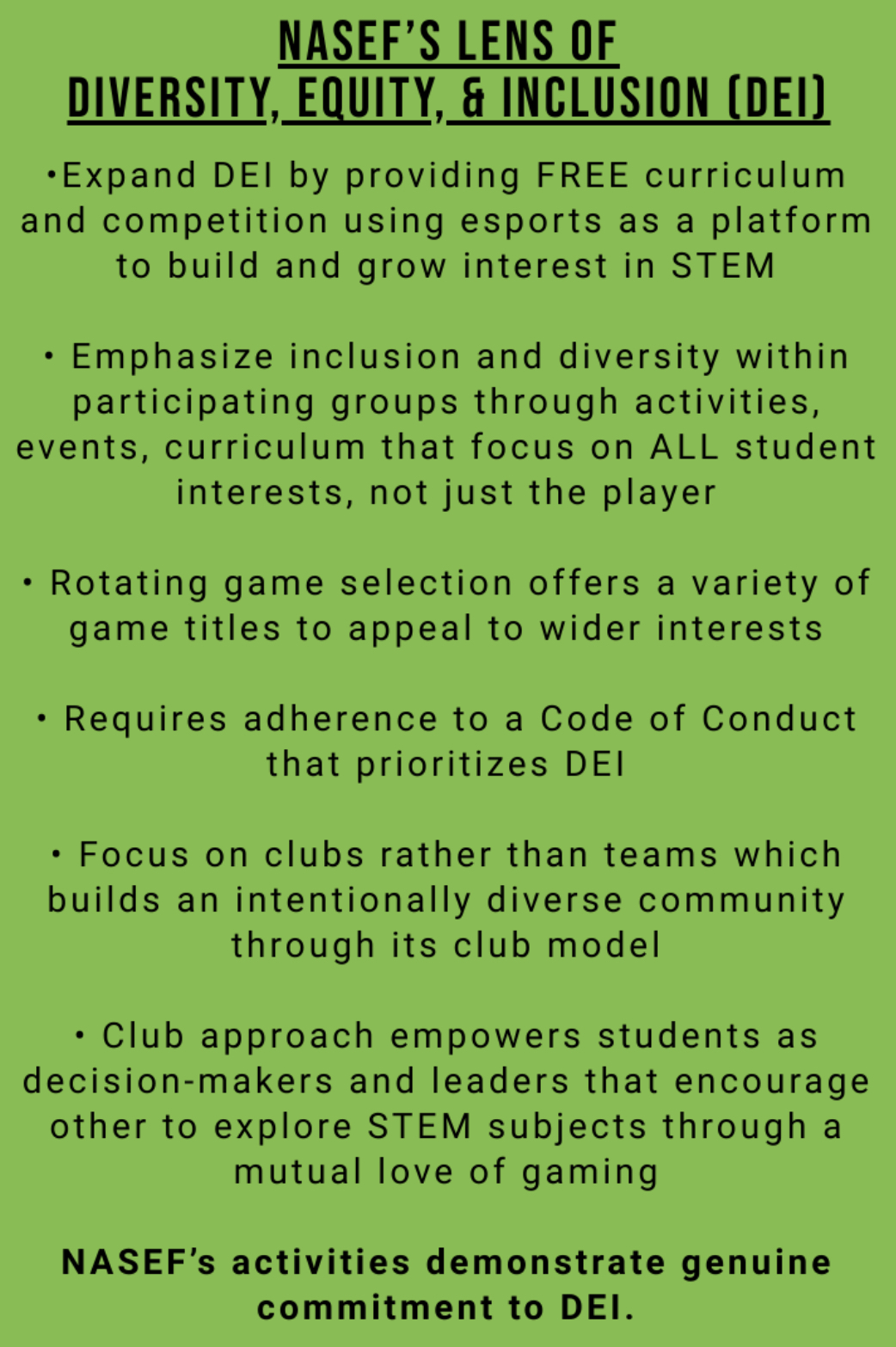
Diversity, inclusion, and access do not happen accidentally. To have a program that allows students to see themselves in nontraditional roles, teachers must be intentionally inclusive. Find role models and videos that feature people from marginalized populations in STEM careers. Personally invite students to participate in esports clubs and camps who might feel as though they don’t belong. Explore resources from The GameHERS, Women in Games, and other groups who are intentionally reaching out to marginalized groups.
Tip 6: Keep everyone on the same team
Competition in schools has been shown to have a negative effect on elementary-aged students. While some cultures value competition, others value collaboration. In elementary esports, inclusion and competition are mutually exclusive. Although students were divided into teams for gameplay, we learned from each other during Farmcraft Camp. Teams shared out new strategies and discoveries every day. There was no ranking system, no score keeping. Teams set goals for themselves based on performance from the day before. The only player a student should be competing against is themself.
Elementary Esports in the Blueberry Capital of the World
The success of our elementary esports camp inspired me to apply to be a NASEF Scholastic Fellow for the 2021-2022 school year. As a Scholastic Fellow, I have continued to explore esports and develop materials for bringing esports into elementary. As a part of the Fellows Program, I am writing an elementary esports curricular unit for NASEF’s Community Library.
I’ve expanded the esports program in South Haven Public Schools to include an exploration of STEM careers in the esports ecosystem. I am adapting materials from the NASEF curricula to make key understandings in esports accessible to elementary students. This summer, I am leading two elementary esports summer camps. In the works is an after school esports club (requested by a parent!) and family gamer nights in which young gamers can play Minecraft with their grown-ups. The addition of a Nintendo Switch to our lab, made possible through a Meta Educator Grant from the LCG Foundation, will expand our titles to include Rocket League and Fall Guys.
Located on the sunset coast of Lake Michigan, South Haven community members have always shared a love for fresh picked blueberries and the beauty of Lake Michigan in every season. Over the past year, the development of our elementary esports program has helped us see that we share a love for gaming, and I for one, can’t wait to see what the future holds.
- The future of educational equity isn’t just more resources–it’s more access to experiences - October 16, 2026
- Vibe coding: 3 easy steps to classroom magic - October 15, 2026
- Helping students discover they belong in science - October 14, 2026