
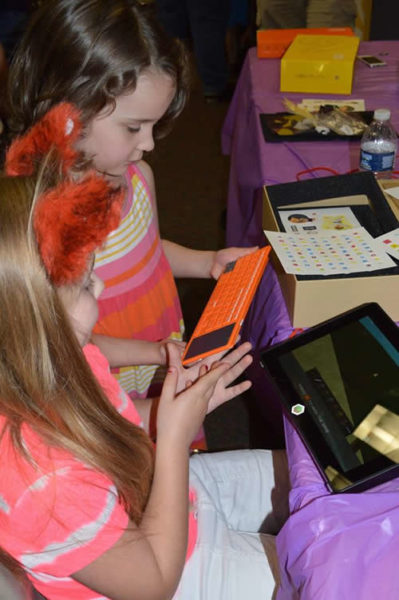
2. Create an engaging curriculum. For our workshop to be successful, we wanted kids to have the opportunity to be as hands-on as possible. To meet that goal, we incorporated Kano kits that allow learners to build their own computer and use it for a variety of coding apps and games. The combination of skill building and fun was really engaging to the kids and helped build both technical and social skills. Our workshops were based on using this kit over time, giving kids the chance to build the kit and then use it for a variety of coding projects.
3. Increase staff understanding and encourage kids’ independence. Being a former classroom teacher, I’ve experienced firsthand the model of learning that happens at the intersection of “I don’t know how to do this, but I want to know how to do this.” Staff members who are used to supervising conventional library activities may experience a transitional period when letting the kids take charge of a project without direct supervision. I’ve used the example of an adult learning how to play the guitar; you’re going to be a lot more invested in learning how to play if you choose to do it yourself, rather than someone coming to you and demanding that you learn to play by next month. Staff should expect to see a healthy level of frustration from kids but know how to turn it into determination.
We encouraged kids to sign up to our workshops with a sibling or a friend. When parents were present, they would often try to involve themselves in the activity. I’ve found it helpful to do an introductory session where kids learn a little bit about the history of computing and we can go over guidelines with parents. It’s important to bring up that the coding resources that kids will be using are designed for their age group and aren’t meant to be mastered in one day.
4. Build confidence. The last big guideline in creating a tech-based workshop is to remind kids that the workshop isn’t school and that they won’t be graded. The library is a safe space to explore creativity, hang out with peers, make mistakes, and learn something new. Many classrooms are incorporating coding concepts, which is great. We wanted to offer a space where kids could feel free to try things out without worrying about an end goal. My advice to any librarian reading this is to view yourself as a facilitator of experiences. Turn your library into a place where kids can assemble to build valuable social—and digital—experiences.
- Teachers weigh the realities of classroom technology in new national survey - September 25, 2026
- An early childhood classroom: Supporting emotional well-being amid everyday challenges - September 24, 2026
- Inspiring curiosity for career exploration and mentoring for pathway success - September 23, 2026