Wed, Sep 10, 2008 Bookmark and Share eMail this Article Send Print this Article Print Media Kit Reprints RSS feeds RSS
Report: Retool instruction, or U.S. will fail
U.S. schools must teach 21st-century skills for the nation to be globally competitive, it says


Primary Topic Channel:  21st Century skills


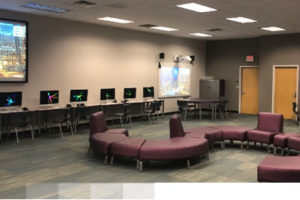
A new report urges U.S. schools to create 21st-century environments in classrooms.

Creating a 21st-century education system that prepares students, workers, and citizens to triumph in the global skills race is the central economic competitiveness issue currently facing the United States, according to a new report from the Partnership for 21st Century Skills (P21). The report provides a sobering wake-up call for the nation's civic and education leaders.

The report, called "21st Century Skills, Education, and Competitiveness," argues that for the United States to be globally competitive--and for states to attract growth industries and create jobs--the nation requires a fresh approach to education that recognizes the critical role 21st-century skills play in the workplace.

The report summarizes the challenges and opportunities that, if left unaddressed, would curtail U.S. competitiveness and diminish the nation's standing in the world economy. It urges policy makers and leaders in business, education, and workforce development to use the report as a resource for shaping policies that are attuned to competitive needs.

"We need to recognize that a 21st-century education is the bedrock of competitiveness--the engine, not simply an input, of the economy," the report says.

It notes that the country's economic output has changed dramatically over the past 30 years, and there is no sign this trend will stop.

In 1967, the production of material goods (such as cars and equipment) and the delivery of material services (such as transportation and construction) accounted for nearly 54 percent of the country's economic output. However, by 1997, the development of information products (such as computers) and the delivery of information services (such as financial and broadcast services) accounted for 63 percent of the country's output.

As the world continues to shift from an industrial economy to a service economy driven by information, knowledge, and innovation, cultivating 21st-century skills is vital to economic success, the report states.

While the global economy has been changing, the United States has focused primarily on closing domestic achievement gaps and largely has ignored the growing necessity of graduating students capable of filling emerging job sectors, according to the report.


And while focusing nationally on closing achievement gaps between the lowest and highest performing students has been a legitimate and useful agenda, the report asserts that this goal has skirted the competitive demand for advanced skills. 

"Equally important to the domestic achievement gap is the global achievement gap between U.S. students--even top performers--and their international counterparts," said Paige Kuni, worldwide manager of K-12 education for Intel Corp. and P21 chair.

"Quite simply, for the United States to stay economically viable and remain a world leader, the country must make closing all achievement gaps a national priority."

 
Continued
Pages: 1 2 | Next ››


Comment now.

Don't forget to check out our Online highlights:
- Discover new resources that help school leaders strengthen their school district inside our new Superintendents Center.
Go to http://www.eschoolnews.com/news/superintendents-center/
- View this week's Student Video News Cast at www.eschoolnews.tv where you can also upload video too!
- Follow eSchool News on Twitter at http://twitter.com/eschoolnews
- Add our RSS feeds or our new widgets to any school web site. Go to http://www.eschoolnews.com/content-exchange-rss/
- Find the latest news in the current issue of eSchool News. Go to http://www.eschoolnews.com/current/

Raise the bar and stay there!

We constantly witness the U.S. dumbing down the curriculum because the students simply do not want to perform. Instead, too many of them only want to memorize enough to help them pass a test, which means they are not learning anything. The longterm effect has dire consequences. Mainly, the ones at the top who raise the bar later lower it by diluting the criteria. In the end everyone loses. We believe paying teachers more would lead to better success in the classroom; however, I am not sure how much that would change anything. Unless students learn how to learn and then transfer this knowledge, the nation will suffer. We must raise the bar and stay there.

Posted By: ed stokes, 2008-09-15 2:23 PM

You get what you pay for.

How many ways can you say reform? I have seen numerous educational reforms come and go. American education will not change behind the classroom door until we pay for the brightest talents and allow them to do the job that needs to be done. Consider that you might pay your baby sitter $5 per hour per kid. Teachers in the school I am familiar with average about 25 kids/hour per teacher. Giving the teachers a planning period means that teachers are with kids about 5 hours/day for about 180 days a year. A little math. $112,500. This, of course, does not consider after school grading, parent calls, and planning. Retooling with out restructuring pay is an exercise in futility. You get what you pay for. A side note - beware the achievement gap even in the global sense of the term. I think this gap is measured using tests of information that is not particularly relevant to emerging job sectors. If we retool to meet new requirements (which I am for) the measure of achievement will have to change. We have a long way to go. We still do not embrace the metric system (SI). We run schools on a schedule meant for kids helping on the farm. We have principals requiring teachers to spend more time filling out lesson plans than actually teaching. We have leaders who jump on and off educational bandwagons more often than CEOs change companies. We have educational research that may be scientifically sound, but pragmatically empty. Retool, I vote yes as long as you remember you get what you pay for.

Posted By: virginia.malone, 2008-09-15 1:56 PM


You need to be registered at eSchoolnews.com to add your comments. If you do not have a username / password please register here ! Registration is very simple and will not take much time!

 
Already registered? Login:
Username:  Want to know more?
Registation Benefits
Password: