How Microsoft's and Philadelphia's innovative school became an example of what not to do
Primary Topic Channel: Tech Leadership
|
|
When it opened its doors in 2006, Philadelphia's School of the Future (SOF) was touted as a high school that would revolutionize education: It would teach at-risk students critical 21st-century skills needed for college and the work force by emphasizing project-based learning, technology, and community involvement. But three years, three superintendents, four principals, and countless problems later, experts at a May 28 panel discussion hosted by the American Enterprise Institute (AEI) agreed: The Microsoft-inspired project has been a failure so far.
Microsoft points to the school's rapid turnover in leadership as the key reason for this failure, but other observers question why the company did not take a more active role in translating its vision for the school into reality. Regardless of where the responsibility lies, the project's failure to date offers several cautionary lessons in school reform--and panelists wondered if the school could use these lessons to succeed in the future.
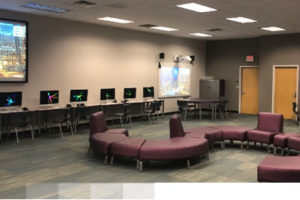
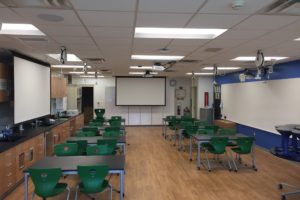
Three years ago, the SOF was a front-runner in the high school redesign race. Microsoft's vision was to invest human capital and expertise into a newly built LEED-certified school that was funded and supported by Philadelphia's school district--led at the time by Superintendent Paul Vallas, who had been singled out by President Clinton as responsible for raising test scores, improving relations with teachers, and increasing positive engagement with the community while CEO of the Chicago Public Schools.
"Microsoft chose to ... assign a team of educators and technologists to work in concert with the school system and the surrounding community to create a sustainable learning environment," said Mary Cullinane, Microsoft's lead on the project and one of the school's initial architects, in 2006.
By creating a general-enrollment school that was paid for, staffed, and operated by the public school system, project organizers aimed to create a model that could be replicated easily in other districts. (See "‘School of the Future' opens doors.")
The components of the school also were considered to be progressive. From alternative school hours to laptops for every student, from a customizable school portal to campus-wide wireless access, and from a panel to design 21st-century curriculum to a new teacher hiring model, the SOF was thought to be a sure winner.
"We naively thought, I guess, that by providing a beautiful building and great resources, these things would automatically yield change. They didn't," said Jan Biros, associate vice president for instructional technology support and campus outreach at Drexel University and a former member of the SOF Curriculum Planning Committee.
A premature start
Microsoft made it clear at the SOF's inception that it would not be overseeing the school's operation; instead, it would lend its initial expertise, provide basic professional development, and then leave the success of the school up to its leaders.
Don't forget to check out our Online highlights:
- Discover new resources that help school leaders strengthen their school district inside our new Superintendents Center.
Go to http://www.eschoolnews.com/news/superintendents-center/
- View this week's Student Video News Cast at www.eschoolnews.tv where you can also upload video too!
- Follow eSchool News on Twitter at http://twitter.com/eschoolnews
- Add our RSS feeds or our new widgets to any school web site. Go to http://www.eschoolnews.com/content-exchange-rss/
- Find the latest news in the current issue of eSchool News. Go to http://www.eschoolnews.com/current/
School of the Future
Two things that often are not taken into account when trying to improve schools: 1) School is a system where students and teachers must work together. Many like to point their finger at teachers as the reason for school failure, yet teachers are people who care enough about other people's children to get the necessary education and go to work in schools. If the needs of teachers, as well as the needs of students, are not taken into account, we risk losing dedicated teachers. 2) Wholesale education reforms fail to take into consideration that the traditional system works pretty well for over 50% of students. We don't need to change the whole system for all students, we need to provide alternatives for students who learn better in different kinds of systems. Education is not "one size fits all." That goes for teachers as well as students.
Posted By: martha_murphy, 2009-06-22 11:58 AM
Where Is The Failure?
Lots of theories and ideas about where to lay the blame, but what failed? Maybe I just missed it in the article. Test scores low? Dropout rate high? I saw a bit about truancy, but, specifically, what is being measured?
Posted By: judypdrsn@yahoo.com, 2009-06-12 4:56 PM
Persistence and Failure Keys to Innovation
Those who study innovation know that failure marks the path to success and that persistence holds the key. In education, we tend to view failure as terminal. Yet failure offers the very lessons that we need to succeed. Tom Kelley in the Ten Faces of Innovation states, "Fail often and early so you can succeed sooner." Hopefully, these early set backs can help the SOF to succeed. I hope so for the kids sake.
Posted By: johnbr, 2009-06-11 11:56 AM
Well, it's obvious that....
...if the same people who designed the hodgepodge of an operating system as Microsoft makes designed a "School of the Future" then it obviously would not be very functional...
Posted By: misterron, 2009-06-10 11:06 PM
District Recalcitrance
This story is the usual school innovation story. The District and the Union have their niche in life and are not that interested in changing it. So, when new innovations come, they configure them specifically to fail. You know, no teacher training, deliberately misconfiguring the portal, not includeing enough expertise. Doesn't it remind you of new math, open classrooms, etc? First clue, standarized tests. Anyone involved in constructivist forms of learning knows that you need different assessment tools to evaluste because gains from this form of learning do not show up on standardized tests. Duh! Second clue, no bye in from the Union. You need teachers with tech backgrounds who want to try new forms of learning. If the Union will not go along, you have zero chance of succeeding. Third Clue, the network. This form of learning depends on an intact and working network, like a modern business. If the network is not robust, neithor will be the learning. The evidence makes me feel that the powers in the Philly school district did not want this experiment to succeed. Also, Microsoft's educational consultants must have known from the onset that the network (portal) was not able to do what it needed to do.
Posted By: pgreene291, 2009-06-10 2:06 PM
Vendor Led Instruction
Companies measure success in profit terms and schools measure success in terms of student outcome and enhanced learning opportunities. Get the difference?

Posted By: ed.morrison, 2009-06-10 1:07 PM
it's the society, stupid
I agree that Microsoft was using this as a marketing strategy. Also, speaking as one who lives in on of the most depressed urban areas in the country, if you don't help the kids get enough to eat every day - a real, true problem, not fixed by a pre-packaged free lunch once a day - and a decent place to live - anyone looked at the transience rates in urban areas lately? I worked at a youht organization at what I called ground zero in the ghetto, and most of the kids were living in makeshift arrangements, moving from relative to relative, while most of the male adults were in prison - and don't start about don't do the crime if you can't do the time - the difference in sentencing between Blacks and Whites for the same crimes is a crime in itself. At any rate, let's be for real - don't expect shiny new things in shiny new schools to substitute for food and decent shelter and adults who are present and able to provide the care children need.
Posted By: trish, 2009-06-09 10:32 AM
Right intentions, wrong focus
So far, I read a lot about leadership, structure, innovation, technology and support. No where did I hear student learning, instruction, outcomes. I always fear when I hear about these grand technological initiatives becasue, rarely do I hear the focus on learning and learning outcomes. So, like Alice, these programs never get where their going because they didn't know in the first place. These programs always seem to start with the technology first and not what they want students to be able to do because of there interaction with it. The only educational programs that succeed are ones with clear goals and that focus on how to reach those goals. But that's just my opinion...or is it?


Posted By: macherb, 2009-06-08 4:56 PM
The failure is not with SOF
As the only journalist among the researchers asked by AEI to contribute to this project, I know a good story when I see one. And the story of the School of the Future is not one of failure, despite the headline and tone of this article. Without a doubt the school in its start-up years has experienced difficulties in turning its ambitious vision into reality and living within the political and practical limitations of a major urban school district. Those difficulties were forthrightly discussed at the conference. My presentation, on teachers, noted that many of the things that SOF has been attempting -- integrating technology, cooperative learning, project-based learning, inquiry-based instruction -- are now part of the Philadelphia school district's strategic plan for reforming high school curriculum. I suggested that the district should draw on the experience of SOF teachers who have actually plunged in and tried to do this, but that point was not picked up by the writer. Microsoft and the school’s planners could have made it easier for themselves by turning SOF into a magnet school with admissions requirements. It has resolutely refused to do that, believing that this kind of forward-looking education should be made available to as wide a group of students as possible. While there is still discussion to be had about the value of more diversity in the student body, this approach is admirable. Urban systems for the most part operate their high schools on a triage model, with schools having escalating levels of admissions criteria. These systems tacitly acknowledge that the comprehensive high school enrolling those students not accepted elsewhere will be lucky to graduate half of them. I was in the room at the National Governors Association conference when Bill Gates declared that the American high school is obsolete. In more than 20 years of covering education I have seen too many bright, talented students deadened and devalued within the anachronistic high school model. Finding a new one that doesn't simply sort students but that engages all of them, makes them realize the value of education, responds to their needs, and helps them develop their skills and talents, is imperative. That is what SOF has aspired to do. The SOF effort has certainly not been problem free, nor has it found “the answer.” But the real failure is not this still-nascent effort, but the lack of courage and commitment by the society at large to do the hard work necessary to reinvent a high school model that no longer works well for too many students. Dale Mezzacappa
Posted By: dalemezz, 2009-06-05 10:52 AM
|
You need to be registered at eSchoolnews.com to add your comments. If you do not have a username / password please register here ! Registration is very simple and will not take much time! |


Comment now.

A Failure on many levels
This project cost the taxpayers of Philadelphia $ 60 million dollars. Even if every student had scored in the upper 1% of the SAT after attending this school, there was no way we could have replicated this model given that it was only designed to support 750 children. The cost was $ 80,000 per child! Microsoft, was the most liquid company in the world at the time, with some $ 40 Billion in Cash and Marketable securities, yet they lent their so-called education expertise and NO MONEY. The SRC Commmission, our School Board, was conned because each child would have a laptop, the school had wireless access and supposedly no books would be used. Education was seemingly going to happen by osmosis. They failed to realize that having competent teachers and administrators in front of the students is much more important than technology (and I say being a 28-year veteran of IBM).
Posted By: djohns, 2009-10-14 5:13 PM