Suggestion that government give every kid a Kindle has many educators questioning benefits, costs, and logistics
Primary Topic Channel: Tech Leadership
|
|
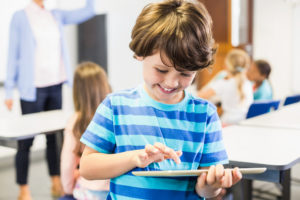
Education experts are split after a recent proposal published by some influential members of the Democratic Party suggested the government provide electronic reading devices to every student in the United States.

The New Democratic Leadership Council's (DLC) paper, "A Kindle in Every Backpack: A proposal for eTextbooks in American Schools," published July 14, states that government should supply each student in the country with an electronic reading device, allowing textbooks to be cheaply distributed and updated. It also would allow teachers to tailor an interactive curriculum that engages digital age learners.

"This proposal is just a concept, an idea to be refined and improved with more dialogue and input," said the proposal's author, Thomas Z. Freedman, a senior fellow at the DLC who served as a member of the 2008 presidential Obama-Biden Transition Project on the Technology, Innovation, and Government Reform Policy Working Group.

Although a rapid-scale plan would initially cost $9 billion more than providing traditional textbooks during the first four years of implementation, writes Freedman, school districts would save $700 million in the fifth year and $500 million annually in the years immediately following.
"While the upfront hardware cost of providing a Kindle-like device to every child would necessitate a high front-end investment, costs for eTextbooks themselves would quickly produce a savings compared with print textbooks," he writes. "If we create savings in one category, the funds can be reassigned to others, like improving teacher pay."
Freedman added that innovation and advancements in eReader technology would drive the cost of the devices and eBooks down over time, continuing to save money for years after replacing traditional textbooks.
But Peter Von Stackelberg, foresight expert at Social Technologies and adjunct professor at the State University of New York College of Technology at Alfred, said the odds of the Kindle DX completely replacing books are slim.
"Paper-based information delivery systems--aka books, magazines, and newspapers--have a number of features that have been successfully used for centuries. Books are an effective method for displaying text and images in a wide variety of lighting conditions at relatively low cost....Annotation and highlighting of selected information is done easily with pencils, pens, and highlighters," he said. "The user interface is simple and effective."
Replacing textbooks and materials with eReaders can cause other problems in the name of saving money, said Corinne A. Gregory, president and founder of SocialSmarts, a schools-based program that integrates social skills, character, and values into core curricula.
"If [the proposal] is trying to lower the cost of textbooks and materials, then you have to consider some other potential problems, such as instead of losing one text book, what happens if a child loses--or has stolen--[his or her] Kindle? Who will bear the cost of the replacement? The students and parents? The schools?" she asked.
Don't forget to check out our Online highlights:
- Discover new resources that help school leaders strengthen their school district inside our new Superintendents Center.
Go to http://www.eschoolnews.com/news/superintendents-center/
- View this week's Student Video News Cast at www.eschoolnews.tv where you can also upload video too!
- Follow eSchool News on Twitter at http://twitter.com/eschoolnews
- Add our RSS feeds or our new widgets to any school web site. Go to http://www.eschoolnews.com/content-exchange-rss/
- Find the latest news in the current issue of eSchool News. Go to http://www.eschoolnews.com/current/
tech innovation to fix ailing schools
It seems to me we are looking for technology "band-aids" to school problems. Shiny tech toys will not solve teachers that are required to tend than teachers, student low achievement, and parent and teacher apathy. Find some good global teaching models worldwide--in US and abroad--and encourage teaching innovation and progress. Avoid the "new is better" syndrome where charters and others get a disproportionate amount of school finance money. Fix school financing so schools can spend more on teachers and not on facilities.
Posted By: ssampier, 2009-08-05 3:35 PM
Based on what research?
Too many people are ready to rush into spending billions on an immature, unready technology and ecosystem. What research shows that e-books contribute any improvement in learning? I've been around long enough to see many fads adopted at great cost in money and effort, and the educational system is not improved to a commensurate level. We'd do better to teach children to think. Now that would really subvert the system. Kindles don't handle images or much besides text. Netbooks with solid-state storage are pretty rugged and would let students access web resources, type papers, and use educational programs. And they cost far less than Kindles when the big kids on the bus take them. A bigger problem is the monopoly pricing of textbooks and marketing "churn" to sell new editions. We could save money by supporting the development of open-source textbooks tailored to the requirements of particular learning communities that could be customized and improved without having to be repurchased. If you take the ideas of Howard Gardner seriously, how does it change your teaching?
Posted By: reptar, 2009-07-29 8:51 AM
Just an ereader?
I am all for the idea of putting technology in the hands of students across all SES boundries. Why limit the technology to readers? Why not give all students a mini-computer and ask the publishers to put the textbook online? This would allow for added content and curriculum like interactive games, video segments etc that would all serve to enhance the technological power of online instruction.
Posted By: dawnkathleenwilson, 2009-07-28 9:44 AM
University Accessibility Counselor
My comment is that the idea is good for the visually challenged and the Learning Disabled - individuals with a Reading comprehension challenge. Make federal grants available so that we can serve students that need the assistive technology!
Posted By: mkimmel, 2009-07-28 9:07 AM
many hurdles
In addition to the good points made above Has anyone tried to get e-texts? The companies we have looked at give one of a few answers: 1) What? No, we don't do that! 2) Sure, you may purchase e-text, at the same cost per copy as the hardback edition. 3) Sure, but it will cost 50% of the hardback and only if you buy the hardback edition as well. Are textbook companies really going to accept a change that would potentially cut into profits (at least initially)? While most of the logistics of giving school children technology to take home (laptops, pdas, etc) can be worked out or minimized w/ acceptable use agreements, insurance etc; there are still some substantial hurdles. 1) What about students that live w/ no electricity at home? "Sorry I didn't read my materials because my battery was dead!" 2) Many that have experience w/ one to one technology initiatives will attest that the majority of students take better care of the tech than expected. However, unless the government requires or allows schools to collect "e-textbook" rental fees, that may wane after time. 3) Is the current Kindle (or whatever they would decide on) able to be differentiated for special needs learners per their individual IEPs? 4) Will flat (country-wide) pricing or state-wide pricing be required or will the little guy pay more per seat than the big dogs? Once again, cutting into the profits of the publishers. I could go one, but... a final thought: If this becomes reality, how long before we see the 1st Kindle based virus? :)
Posted By: swalthes, 2009-07-24 9:19 PM
Silly!
First of all, which eReader would you choose? They do not all use the same file format. Next, why not a netbook? Then the student can word process as well! And, currently, a netbook is less expensive than any eReader. Then, who will pay for all the schools to have digital libraries?
Posted By: wilkcd, 2009-07-24 5:15 PM
Introducing: The Co-Booting CompuBook
A person could, on a piece of scrap paper, list the advantages and disadvantages of the eReader, netbook, and the laptop, and derive a solution taking the best (and omitting the worst) of each.....I would think that a dual-purpose device, call it a "CompuBook", could be built that would satisfy the "hardened" quality of an eReader, while serving up the internet office productivity apps, such as MS Office, and perform the other calc-intensive functions computers do so well. The key here is that the device would "co-boot" to the extent that the eReader layer would be isolated from the computer layer in such a way that, if the computer layer were to choke and die (can you say virus, worm, or Internet Explorer BHO?) the eReader would continue to function. It would continue to serve up textbooks, thus allowing the student to perform exercises and complete homework assignments. Computers are incredibly invaluable machines helping us learn, research, and be massively productive.....But, on the other hand, a computer can never be trusted to boot and perform today the same way it booted and performed yesterday, thanks to viruses, unstable software, incompatible or outdated drivers, “helpware”, and such.....It's just a fact of computing life....Some might say, "Only Windows computers get viruses", but that is a function of supply and demand, not a testament to the security of Mac OSX.......If Apple had 90% of the personal computing market, OSX would be the hackers' platform of choice. Someone should develop such a CompuBook, if they haven't already!
Posted By: wbadthang, 2009-07-24 4:37 PM
Why not a BookE
I can get you a Booke that can do the same as a Kindle but much less. You can email me at Jkemo@bellsouth.net
Posted By: jkemo, 2009-07-24 2:18 PM
Why not Laptops?
The Kindles seems limited. You could read text on a laptop and computer skills seem important these days. It may be a little more expensive, but netbook prices will be similar.
Posted By: center, 2009-07-24 1:19 PM
|
You need to be registered at eSchoolnews.com to add your comments. If you do not have a username / password please register here ! Registration is very simple and will not take much time! |


Comment now.

eBooks and Kindles for all
I love this idea and can see many benefits. My sons' teachers don't follow textbooks, only pull out small parts they like and work for kids. Books too busy and contain alot of "junk", waste time, busy work and take real time from learning. eBooks have alot of pluses!!
Posted By: tona75@msn.com, 2009-08-19 2:20 PM