
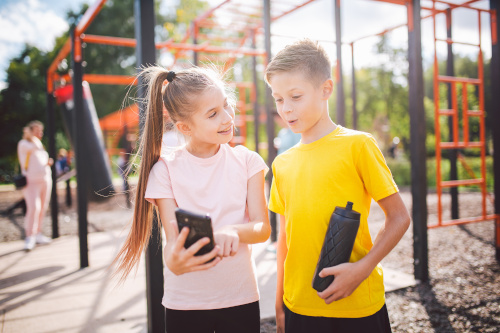
By using wearable technology, students can begin to connect the feeling of the physical benefits of exercise and the impact the activity has on their bodies. As an added collaborative bonus, wearable technology give students the ability to share their data, compare, and compete with others.
Flipped classroom
The flipped classroom gives teachers the ability to instruct students virtually before a lesson, so the time spent in class can be used for application and engagement rather than initial learning or lecture. The teacher can create the lesson, including visuals, graphics, digital resource materials, and formative assessments that students complete prior to the in person lesson. This encourages students to learn in different ways and at their own pace. They are able to go back through the digital lesson and review and slow down anything they do not initially understand. This way, when they get to class, they are prepared with questions and are ready to apply their new knowledge to the lesson. In person, students are then able to collaboratively practice what they have learned together.
Flipped lessons also allow students to ask their questions in person while they attempt to apply their new knowledge. It encourages students to learn, fail, ask questions, critically think, and understand more fully.
Benefits from technology in PE class
Physical education teachers are finding all sorts of ways to keep PE relevant and ensure students are practicing their 21st-century skills in class.
The main focus of PE continues to rely upon fitness, skill development, and strategy etc. However, teachers need ways to keep the 21st-century student engaged while learning. Today’s students have grown up with technology at their fingertips constantly. The best way to keep them engaged in class is to speak their language and to include technologies and strategies that keep them connected.
Project-based learning is a teaching strategy that gives the learning responsibility to the student, urging them to collaborate and problem solve all while working with technology. Wearable technology gives students the ability to understand how their physical movements connect with their overall physical fitness in real time, while being able to collaborate and compete with others. The flipped lesson benefits students in physical education by minimizing lecture time in the classroom and maximizes action and engagement. By front loading-content before class, students can come to class with a working knowledge of what is needed or expected.
- AI is stealing students’ ability to think critically–Journalism 101 may be an antidote - October 23, 2026
- I run an edtech platform I hope you barely use - October 22, 2026
- What 500 doorsteps taught me about getting kids back to school - October 21, 2026