
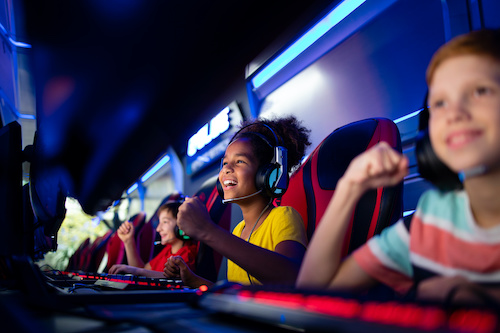
2. Ensure Comfort
The learning space you utilize for your elementary esports program should reflect the physical needs of young learners. Furnishings should be convenient and comfortable, with chairs and tables that are appropriately sized for the children who will be using them. Adjustable desks and chairs can be helpful to ensure comfort and function across grade levels, so that students can easily alter their gaming space to get their monitors and keyboards at a comfortable height. If your esports space will be hosting students who are not always actively playing or are just observing, tiered modular seating can also be a practical addition to the space. Finally, make sure the space is well-lit and ventilated, as children are more sensitive to environmental factors than adults.
3. Focus On Skills and Collaboration
An elementary esports program should be focused on developing skills and team-building. Esports can be an engaging way to teach children critical thinking, problem-solving, and strategic planning skills, while also introducing them to STEM ideas and concepts. Students won’t learn these skills in-depth, but the foundations they build will carry them into future esports opportunities in middle and high school, where they can further develop their knowledge.
Competition has been shown to have some negative effects on elementary-aged students, so collaboration is an important part of building a successful program for young learners. While scholastic esports is traditionally a competitive activity, working collaboratively is a key part of joining an esports team at all age levels. An elementary esports program should emphasize the importance of teamwork and sportsmanship, so it’s important to incorporate activities and exercises that promote collaboration and communication.
4. Find Ways to Engage Young Students
To create a successful program, it’s crucial to find ways to make esports fun and engaging for young learners. Elementary students have short attention spans, so it’s important to keep the program interesting and exciting. This can be achieved through the use of games, rewards, and incentives, alongside regular encouragement and recognition of achievements. For example, a “Player of the Week” award or a point system can encourage children to work towards personal goals and improve their skills, while also highlighting their accomplishments to their peers and helping them feel proud of their work.
Scholastic esports can be a great opportunity for elementary learners to build and expand upon valuable skills and interests at a young age. Through an elementary esports program, children are able to develop a foundation in esports that can set them up for future success in middle school, high school, and college esports programs.
Related:
How esports is creating scholarships, jobs, and school investments
Are you leveling up with esports?
- The oral exam is back, and AI may be the reason - September 18, 2026
- Let’s work to keep our students while we still have them - September 17, 2026
- Quit saying “I’m not a math person” - September 16, 2026