
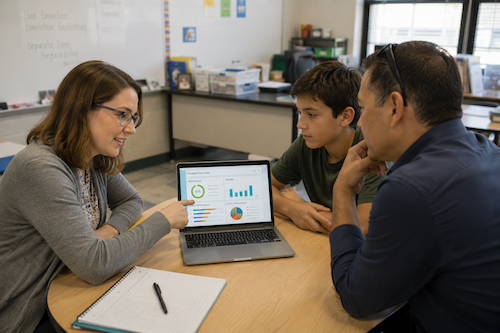
Centralizing this information allows districts to move from looking at the past to predicting the future. When attendance, behavior and test scores from different apps are brought together in one place, both educators and parents can spot patterns long before the report card arrives. For example, if a system flags a sudden dip in math scores at the same time a student starts getting in trouble in class, data can move the conversation beyond the “what” and toward the “why” that allows schools to find more targeted intervention that addresses the student’s actual needs. When used correctly, it can even allow educators to predict how a student will perform on national tests and provide additional support when needed.
Beyond helping families, this unified approach helps the entire district run more effectively. As pandemic-era federal funding dries up, districts can no longer afford to spend billions on programs that lack a clear correlation with academic growth. When leaders have a clear picture of which programs are making a real difference for students and which are falling short, they can spend their limited budgets more wisely and avoid wasting money on solutions that don’t improve students’ outcomes in practice.
Keeping systems simple doesn’t forgo data privacy; if anything, it helps reduce bad practices. When a district’s systems are too cumbersome to navigate, educators often resort to risky shortcuts. I’ve spoken with districts that previously tracked student information in unsecured, public-facing spreadsheets, creating a massive liability born out of the frustration and helplessness that stems from using overwhelming and confusing platforms. A unified system solves this by being secure but open: It provides specialists and parents with the specific, real-time insights they need while maintaining the rigorous encryption required to protect student identities. By simplifying the interface, districts ensure that the path of least resistance is also the one that’s most secure.
When information flows securely and clearly, schools can ensure that every instructional hour and budget dollar is laser-focused on producing student growth. This technical alignment creates a human result: Parents and teachers are no longer disconnected about where a child struggles or excels. By consolidating the systems that parents, teachers and students use every day, districts move beyond a fragmented picture of progress toward a shared roadmap where every stakeholder has the clarity needed to help every student succeed.
- Why learning can’t stop when the lesson ends - October 19, 2026
- The future of educational equity isn’t just more resources–it’s more access to experiences - October 16, 2026
- Vibe coding: 3 easy steps to classroom magic - October 15, 2026