
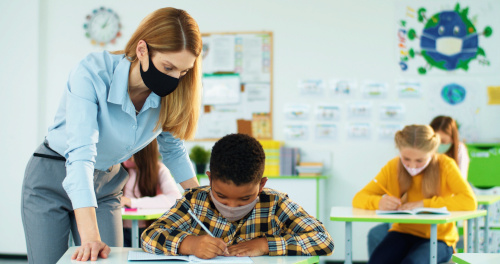
Finally, teachers are grappling with the widely varying academic and emotional needs of their students. Though some students thrived under virtual and at-home learning, many others struggled or were unable to engage at all due to technological or personal constraints. Some students and teachers alike faced major crises during the pandemic, including the deaths and serious illnesses of loved ones. Given that Black, Indigenous, and Latinx communities have been hit hardest by the pandemic, the personal hurdles to returning to school are especially high in these communities. As teachers take stock of their students’ complex needs, and their own, they must find ways to move forward without ignoring the hardships of the past year. This is a daunting task.
Fortunately, there are steps school systems can take to help teachers cope with additional stress. First, schools must prioritize community health and safety. This may mean using funds from the 2021 American Rescue Plan for the provision of infrastructure such as functional air ventilation systems, windows that open, and safe outdoor spaces for eating and play. Depending on COVID case rates in the community, it may include requiring that students wear masks, or even that students 12 and over be vaccinated, as the Los Angeles Unified School District recently voted to do.
Second, schools can clarify the procedures they will use if student quarantine or school closure becomes necessary. For instance, they may wish to help teachers streamline the posting of assignments each week in an online learning management system. This way, students and parents will always know where to locate assignments and due dates, whether accessing them from school or home.
Third, professional development should help teachers adapt the existing curriculum to students’ varying academic needs. Meanwhile, policymakers should avoid basing school or teacher evaluations on students’ test scores in the current academic year, because many teachers will be adapting the curriculum to revisit content students missed in the previous year.
Finally, to help teachers and students manage difficult emotions related to the pandemic, schools may wish to provide training in mindfulness and stress management. Several well-designed studies in public schools have demonstrated the effectiveness of low-cost mindfulness programs for reducing teacher burnout and student stress and enhancing students’ emotional regulation skills.
It is understandable that many teachers will face anxiety in returning to in-person schooling during a pandemic. But if schools place community well-being at the forefront of their planning, they can help create safe havens for learning in uncertain times.
- A new approach to middle school math data boosted our state test scores - September 2, 2026
- We stopped waiting for the teacher pipeline–we built our own - September 1, 2026
- A blanket screen-time ban won’t fix what’s broken in edtech - August 31, 2026