
That’s essentially what we do with listening.
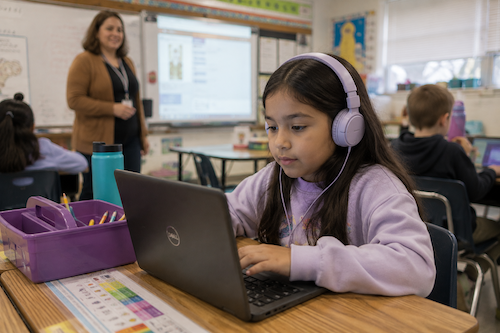
Many people believe listening simply means remaining quiet while someone else speaks. In reality, effective listening requires intention, attention, processing, interpretation, and understanding. Our brains naturally process information several times faster than people speak, causing minds to wander unless students are taught strategies that help them stay engaged.
Teaching listening is not about telling children to “pay attention.”
It’s about giving them practical tools they can use to remain mentally present, organize information, ask meaningful questions, and understand what another person is actually communicating.
When students develop these skills, classrooms change.
Teachers spend less time managing behavior and more time teaching. Students become more engaged in discussions, collaborate more effectively with classmates, retain more information, and build stronger social-emotional skills. Research also shows that stronger listening abilities support reading comprehension, critical thinking, and overall academic achievement.
The benefits don’t stop when the school bell rings.
Listening is one of the most important skills employers seek in the workforce. It strengthens leadership, teamwork, customer service, problem-solving, and innovation. Strong listeners build healthier relationships, resolve conflicts more effectively, and make better decisions throughout life.
In many ways, listening is the foundation upon which every other communication skill is built.
As schools continue searching for ways to improve academic outcomes, reduce classroom disruptions, and prepare students for future success, perhaps it’s time to ask a simple question:
Why are we expecting children to master a skill we have never intentionally taught them?
This school year offers an opportunity to change that.
Teaching listening should not be viewed as another program competing for instructional time. It should be recognized as the foundation that makes every minute of instruction more effective.
If we truly want students to learn more, remember more, and succeed beyond the classroom, we must stop assuming they know how to listen.
Instead, we need to teach them.
Because when students learn how to listen to understand, they become better learners—not just for this school year, but for life.
- The future of educational equity isn’t just more resources–it’s more access to experiences - October 16, 2026
- Vibe coding: 3 easy steps to classroom magic - October 15, 2026
- Helping students discover they belong in science - October 14, 2026