
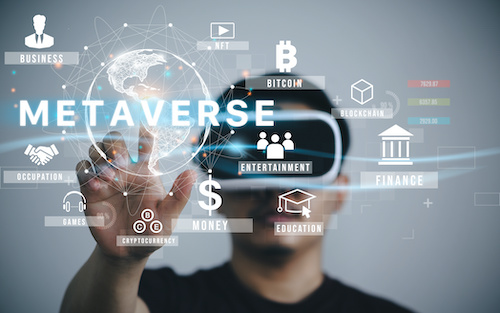
While the concept of a predictive metaverse is still largely theoretical, some experts believe it could represent the next stage of virtual worlds, offering unprecedented levels of personalization and interactivity.
So, what does this mean for education?
If the predictive metaverse can be used to predict the buying habits of shoppers, it can also provide guided learning for students in a variety of ways:
Personalized learning: AI can analyze a student’s learning style and create a personalized curriculum based on their strengths and weaknesses.
Adaptive assessments: AI can create adaptive assessments that adjust the difficulty of questions based on a student’s performance, ensuring that the student is being challenged but not overwhelmed.
Intelligent tutoring systems: AI-powered tutoring systems can provide students with immediate feedback and guidance, helping them to understand concepts and master skills more quickly.
Virtual assistants: AI-powered virtual assistants can answer students’ questions and provide support 24/7, allowing them to learn at their own pace and on their own schedule.
Language learning: AI-powered language learning tools can provide students with real-time feedback on their pronunciation and grammar, helping them to improve their language skills more quickly.
The last few years have also seen an increase in the number of children being home-schooled. In the UK, a study carried out by the Association of Directors of Children Services (ADCS) shows a 34 percent increase in the number of children that are home-schooled in the UK. The US takes the lead with this–a study carried out by the National Home Education Research Institute (NHERI) shows the percentage of children being home-schooled has nearly tripled since mid-2019, and since the pandemic, this figure is rising year on year.
There are many factors affecting this: Family cultures and beliefs may not align with the school’s culture and beliefs and so parents/caregivers feel their child should be taught at home. But there is another huge factor: Many parents feel their child learns better and is more engaged when learning from home. This presents an exciting opportunity for educators and other content creators to collaborate and utilize the virtual world to educate children in a much more personalized and creative way, without the confines of the school classroom and a stagnant curriculum.
Ultimately, AI can provide guided learning by leveraging its ability to process large amounts of data and adapt it to individual student needs, making learning more effective, efficient, and importantly, relevant. This, in turn, can transform the education system and provide an exciting supplement or alternative to existing school curriculums.
Due to the exponential advancements taking place within tech, I believe we are going to see huge, exciting shifts in the way knowledge is taught and consumed–an educational revolution.
Related:
6 benefits of immersive learning with the metaverse
- What attendance data can teach districts about their own actions - November 5, 2026
- Edtech stakeholders urge support for E-Rate - November 4, 2026
- Why one-off AI training will not prepare teachers - November 3, 2026