
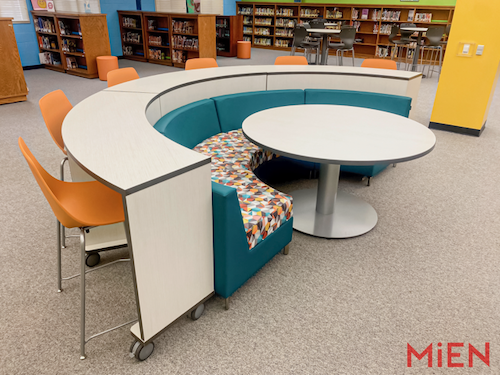
2. Set parameters for design. The design of our new media centers had to be different, progressive, and sustainable. This furniture would have to last another 30 years because that’s probably how long it’ll take before we can order it again. There also had to be a way to reposition the furniture to support collaboration among teachers and students, and to create places for both small and large group instruction. Finally, we wanted mobile shelving and an easy way to disinfect and clean all of the furniture and surfaces.
3. Incorporate technology early in the game. We wanted the media center to have mobile power. We ordered some power strips that could be mobilized or moved around because some of our media centers only had three total outlets; you have to think about that when you’re using technology. Also, make sure the tables are big enough to hold your laptops and other items. Make sure your wi-fi infrastructure is in place. Digital content is important—particularly in middle and high school—and you have to make sure that you provide the space and capability for massive downloads at one time for the entire class.
4. Don’t get too many cooks in the kitchen. We got our principals involved at the outset and let them look at the final designs (and offer any input), but we didn’t let everyone weigh in—knowing that it can easily delay or hold up progress. To keep it as simple as possible, we involved the principals and the media coordinators, who then independently shared information with individual teachers as they saw fit.
5. Choose pieces that encourage collaboration. Make sure the tables can be redesigned and reconfigured. Sometimes our middle and elementary schools work on robotics or LEGOs and need the tables to be able to be put together or pulled apart. Finally, make sure the furniture and the other items that you’re ordering complement the collaboration and instruction that needs to take place in that space.
We kicked off our new media installations in February, which means some students saw the new facilities for the first time when they returned for the 2023-24 school year. Once all of our existing middle and high school media centers are upgraded, we plan to use the modern spaces in new ways.
For example, we’d like to roll out esports in the high school media centers at some point, because we now have the facilities to be able to do that. We’ve been in the 21st century now for 23 years; it’s time to start thinking about the next one.
Related:
How to create engaging active learning environments
5 of the biggest education trends in 2023
- We stopped waiting for the teacher pipeline–we built our own - September 1, 2026
- A blanket screen-time ban won’t fix what’s broken in edtech - August 31, 2026
- Students won’t remember every lesson, but here’s what’ll stick - August 27, 2026