
Key points:
- Listen, learn, and pay attention to what matters most to you as a leader
- Being a principal just got harder–and here’s why
- How consistent communication transformed our school culture
- For more news on school culture, visit eSN’s Educational Leadership hub
Over the last 15 years, I have observed a recurring pattern. A new principal, whether brand new to the role or a veteran principal arriving at a new school, wants to make an immediate impact. It makes sense. We want to show that we were the right choice for the job. We want to demonstrate that we are willing to work hard and improve things. We want to help.
I remember arriving at one school and immediately wanting to give the librarian feedback. I had opinions about how the library was organized, which books were displayed, and even the posters hanging on the walls. In my mind, I was helping.
Luckily, a wise veteran teacher pulled me aside and shared some important context. She explained that the librarian’s most important role wasn’t organizing shelves. It was creating a safe and welcoming space for students, especially those who were new to the school. She spent countless hours building relationships with children and reaching out to families. The issue wasn’t that the librarian wasn’t doing her job. The issue was that she needed more support. The better solution was hiring a library aide to help maintain the collection so she could continue focusing on the work that mattered most.
Over the years, I have observed a second pattern. New principals who rush to make changes rarely get the results they are hoping for.
Even when our intentions are good, quick changes can leave teachers and staff feeling undervalued. They can send the message that the new leader has already decided what is broken before taking the time to understand why things are done the way they are.
After leading in multiple schools, I have come to believe that the opposite approach is far more effective. Except for urgent child safety concerns, a new principal’s job is not to change the school. It is to spend the first year understanding the school.
Here are four things I do to help me understand a school before trying to lead one.
1. Invest in relationships before initiatives
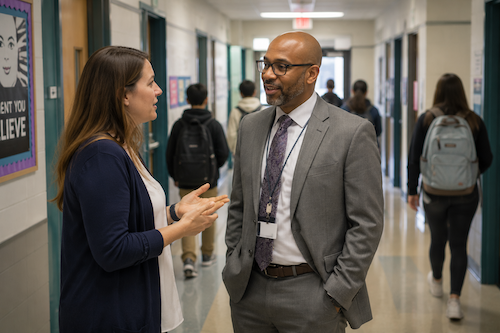
The most important work in your first year is building relationships with every single person on your campus, from the custodians to the front office staff to the students to the teachers. If they are a human being on your campus, take the time to get to know them.
In a smaller school, this can be done through individual meetings with teachers. I typically schedule 15 minutes with each teacher and ask questions such as:
- What do you enjoy most about working here?
- What challenges make your work harder?
- What are our students’ greatest strengths? What are their greatest challenges?
- What support would you like from the administration?
- If you could change one thing about our daily operations, what would it be?
In larger schools, this can be done through grade level or department focus groups. In really large schools, it can be done through a Google Form. However you do it, the goal is the same: Be curious, listen, and seek to understand. I ask follow-up questions and take notes. Not every piece of feedback will be objective. Some people will have agendas. That’s okay. If you listen carefully enough, patterns will emerge. The goal is not to solve every problem. The goal is to understand the people you serve.
I get to know students by walking around during breaks, welcoming them off the bus in the morning, and making myself a regular presence in the hallways during passing periods. In the mornings, I tell students, “Good morning, we’re glad you’re here today.” I ask about the soccer game they played last weekend, their favorite YouTuber, the book they’re reading, or the latest project they’re working on. I comment on artwork displayed in the hallways or congratulate them on a performance or accomplishment. In the afternoon, I tell them to have a great afternoon. The goal is to become such a familiar part of students’ day that they don’t think twice about seeing you in the hallways.
We all know that teacher aides, nurses, custodial staff, security personnel, and front office staff can make or break a school. They are often the hardest-working people in the building and hold an incredible amount of institutional knowledge. I make a point of checking in with them several times each week, thanking them for what they do, and asking how I can support them.
These conversations take time, but they are never time wasted. They are the foundation upon which every future decision, initiative, and improvement will rest.
- The future of educational equity isn’t just more resources–it’s more access to experiences - October 16, 2026
- Vibe coding: 3 easy steps to classroom magic - October 15, 2026
- Helping students discover they belong in science - October 14, 2026