
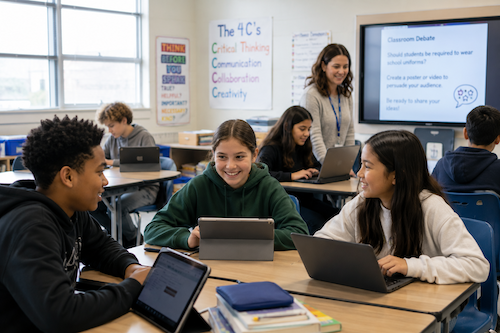
Likewise, classrooms become more engaging when teachers celebrate positive behaviors far more frequently than they correct negative ones. This is because compliance alone is not the same as academic engagement. Frequent checks for understanding, collaborative discussions, purposeful questioning, and targeted small-group instruction help ensure that each student continues progressing toward mastery. Intentional instruction also requires educators to use data to identify learning gaps before they become larger obstacles. When teachers respond quickly with meaningful interventions, the students gain both the skills and confidence needed to move forward.
Students who are already struggling academically often become disruptive because they feel unsuccessful or disconnected from the learning process. Instead of viewing behavior as the primary problem, effective teachers look for the underlying cause and provide support while maintaining clear expectations. Small-group instruction, regular feedback, and opportunities for students to demonstrate understanding can rebuild both competence and confidence.
Equally important is ensuring that every student feels seen each day. A simple greeting, a positive conversation, or recognition for making good choices can have a lasting impact on a child’s attitude toward school. When positive interactions consistently outweigh corrective ones, students are much more likely to be more willing to take academic risks and persevere through challenges. They begin to view mistakes as part of learning rather than evidence of failure. This shift in mindset creates classrooms where engagement naturally replaces resistance.
Ultimately, a positive classroom culture is built through thousands of intentional interactions. It is not built on a single activity or classroom decoration. A positive classroom culture requires educators to be present, prepared, and committed every day, including when the school year becomes extra demanding. Maintaining that consistency is not a sprint, but a marathon that requires energy, reflection, and perseverance.
The most successful teachers continually ask themselves which parts of their practice may still be running on autopilot, along with seeking opportunities to improve. They understand that every interaction contributes to the climate they create for their students. When every adult remains focused on what is best for children, schools become a place where every student is known, loved, challenged, and prepared for the future. Those daily commitments foster not only academic achievement but also purpose, confidence, leadership, and resilience. A positive classroom culture is more than an educational strategy and is the foundation upon which lasting student success is built.
- The future of educational equity isn’t just more resources–it’s more access to experiences - October 16, 2026
- Vibe coding: 3 easy steps to classroom magic - October 15, 2026
- Helping students discover they belong in science - October 14, 2026