
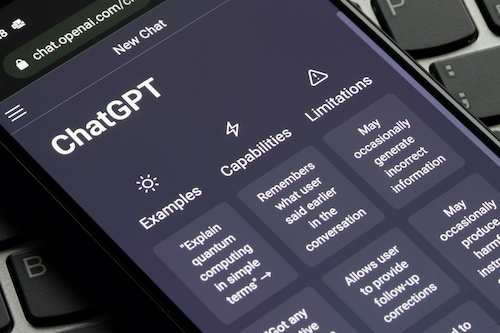
The problem isn’t ChatGPT. The answer isn’t banning tools students will inevitably utilize. As the emphasis has shifted to the final “product” (e.g., test score, course deliverable, etc.), the “process” of learning has seemingly become a secondary endeavor. Reversing this trend to prioritize ideological exploration, the creative revision process, and student inquiry as focal points of the curriculum and assessment models is paramount. ChatGPT may catalyze the return to a “process-over-product” approach.
As Barry Gilmore suggested in his 2008 book, “Plagiarism,” students primarily cheat for four reasons: student confusion, external pressures, cultural expectations, and perceptions of ease. To further simplify it, students recognize all that matters is the final deliverable, and getting there supersedes all else.
It’s easy to cheat because technology can efficiently produce high-quality deliverables when the goal is receiving a high grade instead of course engagement and a deep understanding of the materials. The value we derive from education stems from the process of learning. Yet, the only piece that’s evaluated is the final product. This dichotomy has created an environment that fails to foster a culture of learning. A culture where creativity, interactive discourse, and exploring ideas in a manner relevant to students’ lives are inherent components of education.
A curriculum and assessment model absent of student agency has contributed to rising levels of student disengagement. According to a nationwide survey of over 20,000 U.S. high school students, nearly 75 percent reported having “negative” feelings about school. With a clear linkage between student engagement and achievement levels, it follows that rising disengagement levels will yield worse educational outcomes. At the same time, cheating will remain an unfortunate byproduct of the current paradigm, irrespective of the presence of ChatGPT or similar tools.
Said differently, educational outcomes, student agency, and the propensity to cheat are all largely a function of student engagement. If that’s the case, criticizing ChatGPT and student cheating appears misguided as it does not address the issue’s root: student engagement. A McGraw Hill survey found that 71 percent of students believed technology increased their engagement with course materials and 81 percent believed digital technologies helped to improve efficiency.
ChatGPT and similar technology tools have immense potential to augment the learning process while increasing student engagement. For instance, simply starting assignments is a primary barrier, whether due to a lack of interest, familiarity with the topic, or fear of failure. In this case, a pointed prompt to ChatGPT will yield the foundational jump-start that many students need.
Furthermore, ChatGPT may level the classroom playing field to increase participation and student confidence. A Skyfactor Research study of high school students demonstrated a positive correlation between class participation and GPA. However, participating in class can often feel daunting when one lacks the foundational background in a topic. ChatGPT can play an essential role by quickly getting students up to speed on a topic to spur engagement while providing a roadmap for further inquiry.
The presence of ChatGPT calls for a pragmatic approach to rethinking the current curriculum and assessment models. With the ability to generate instant answers to standard homework and exam questions, cheating is undoubtedly easier. However, this simply highlights the need to shift away from a model based on rote memorization and regurgitation and towards one that promotes creativity and student agency.
Educators must view ChatGPT as a way to enhance, rather than undermine, the learning process. By leveraging the tool to jump-start the critical thinking process and enhance student problem-solving aptitudes, it will also mitigate the temptation to cheat in the first place. Accordingly, it is paramount that we return to a “process-over-product” approach in an era where AI will become ubiquitous in education, the workforce, and day-to-day life.
By embracing ChatGPT under a student-centered approach, educators can cultivate an environment where the learning process will drive engagement and ensure students are prepared to meet the challenges and opportunities of the future.
Related:
ChatGPT can generate, but can it create?
5 ways educators can leverage ChatGPT
- 5 strategies to boost U.S. K-12 math achievement - September 29, 2026
- What E-Rate makes possible: Four lessons from our district - September 28, 2026
- Teachers weigh the realities of classroom technology in new national survey - September 25, 2026