
Key points:
- Starting a PBL unit opens a world of possibilities for students
- 4 ways to turn math fears into math cheers
- The key to boosting math achievement? Neuroscience
- For more on PBL, visit eSN’s Innovative Teaching hub
Building a strong foundation in math during elementary and middle school is essential for success in the later grades. Because each concept builds on the last, students must truly grasp the material before moving forward. The key to that deeper understanding is making math feel relevant, engaging, and fun. I teach sixth-grade math, and one of the lifelines I’ve found for engaging students is project-based learning (PBL).
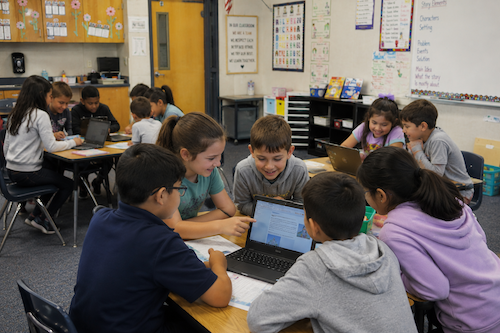
Project based learning is a teaching method where students learn by doing real-world or personally meaningful projects. At our school, each day we provide students with meaningful, engaging lessons that challenge them to question, explore, and analyze–and then present their newly acquired knowledge. With PBL, they apply the concepts they are learning to the project they are working on, which builds relevance and helps them connect the dots. One of my favorite parts of teaching is seeing students light up when they connect what they are learning to something in the real world.
The Pack Perfection project
My sixth-grade math students recently completed a project called “Pack Perfection” from PBLWorks. The project is available through TEACH, PBLWorks’ online platform, which gives teachers access to Gold Standard PBL project units across grade levels and walks them through implementation step by step. TEACH has made it much easier for me to do authentic Gold Standard PBL (PBLWorks’ research-backed framework for high-quality project design).
Pack Perfection is a four-week geometry unit focused primarily on volume and surface area, though it also covers concepts such as multiplying decimals. The driving question is: “How can we make a backpack that fits the needs of our clients?” I think the question itself allows for variety. All students have different types of clients from our community, and they have to design their backpacks accordingly. They do interviews and research to understand their client’s needs, then they go through the process of designing and constructing the backpacks, learning and applying math skills along the way. The students had a really fun time making backpacks and customizing them based on their specific clients.
Hitting multiple standards
A common misconception is that PBL projects won’t cover all required curriculum standards. In practice, they meet the standards, and then some. Students had to figure out how much fabric they needed for the bag and had to research different fabrics and their prices. They learned about unit rates, which will be helpful when we go into our next unit about ratios. I liked that the project takes a circular approach, connecting standards to one another. With this project, students can see the relevance of the math concepts they are learning and how the concepts connect.
Watching students lead and grow
As students moved through the project from concept to design to construction, I felt a definite shift toward the latter half. The students became increasingly independent. That’s one of the hallmarks of PBL. Eventually, students say, “I don’t need you anymore.” That’s by design. They are leading their own learning. I could just let them go and do their thing. Toward the end, it was very autonomous and hands-on, and the project was moving much more quickly.
One of the most rewarding things about the project was seeing how students responded. One student who typically struggles with math blossomed during this project. He was engaged and excited! And it wasn’t just him. This happened with the whole class. I was so proud of them when they started using the language of math, talking about dimensions and other concepts in math terms. The project connected math concepts to real life, and the students began to see the world differently. They can’t wait for the next project.
Strategies for successful PBL
Starting PBL for the first time can sometimes seem daunting, but I assure you it will be worth it! Recently, I participated in an online panel discussion with PBLWorks, and I was asked what advice I would share with other teachers new to PBL. Here are my suggestions:
- If you want to do PBL, advocate persistently with your administrators and help them see the value and impact for students. PBLWorks TEACH is a great way to get started because you don’t have to have experience with PBL to be successful with it. I was blessed when I approached my administration about using PBLWorks TEACH; they said yes. Advocate for the curriculum you want to use. Make your case. As teachers, our students are our customers–and too often, what they are getting in the classroom isn’t what they need. But when I do PBL, I never have to wonder if that’s the case.
- Don’t be afraid to let the students take the lead. That’s how PBL works. As a teacher, you don’t want to be needed. You want to facilitate. The students are like little birds–they are going to fly and do their own thing and you just need to be there to guide them.
- Don’t let PBL scare you. Too often, teachers say, “It wouldn’t work at my school.” I’ve done PBL at public, charter, and private schools. Every time, children thrive. They all want to learn and feel engaged. PBL is adaptable for every school and every student. They’re learning by doing, and there are so many ways to differentiate instruction based on your class and your students. Every student can do PBL.
As teachers, we find it so rewarding when we see students fall in love with learning. The projects I’ve done have made math relevant, engaging, and fun–and when students light up, you know they’re falling in love with learning. We all got into education to make a difference, and PBL has helped me do that.
- What 500 doorsteps taught me about getting kids back to school - October 21, 2026
- The power of one: How the school librarian can help schools do more with less - October 20, 2026
- Why learning can’t stop when the lesson ends - October 19, 2026