
COVID-19 ushered forth a plethora of new safety guidelines and strategies intended to bring students and teachers back to the classroom as safely as possible. Indoor air quality has topped the list of school leaders’ concerns.
With students back in physical classrooms, air quality must take priority regardless of a district’s mask policy.
Join this eSchool News webinar to learn about:
- health and safety risks associated with impure air and the need to “up our game” in classroom air purification
- regulatory guidelines on indoor air quality and a practical guide to evaluating your present air purification system(s)
- your peers’ experiences going through a recent upgrade to fix air quality concerns

- Children learn best on paper: We need better technology, not less of it - July 13, 2026
- In districts, reaching readiness, retention, and success - March 5, 2026
- AI use is on the rise, but is guidance keeping pace? - January 2, 2026
More from eSchool News
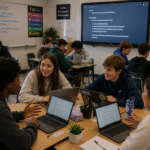
Building an everyday equitable practice for AI in schools
AI technology is advancing rapidly in schools, but research is increasingly showing that Large Language Models (LLMs) lack the common sense, morality, and knowledge of individual classroom dynamics needed to be truly equitable.

A new approach to middle school math data boosted our state test scores
Picture a group of middle school math teachers meeting to mull over a specific problem. Their eighth graders keep missing the same assessment question about graphing a system equation, and the educators’ assignment is to figure out why.
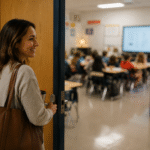
We stopped waiting for the teacher pipeline–we built our own
Every hiring season, school districts ask the same question: Where are the teachers? We stopped asking and started building.

A blanket screen-time ban won’t fix what’s broken in edtech
Many parents, policymakers, and educators are worried about screens in schools. They’ve observed the positive effects of cell phone bans and are wondering how edtech might contribute to real issues, including declining attention spans and learning loss.

Answering the question behind the question
Librarians and instructional designers have long understood that the first question someone asks is not always the question they need answered. In a library reference interview, a patron’s initial request is often just the starting point for uncovering the real information needed.

Students won’t remember every lesson, but here’s what’ll stick
For a lot of students, school can feel like a transaction: You do the work, you get the check mark, and then you move on. That model can unintentionally cap what students show us about what they know and can do.

Building inclusive school communities through integrated digital strategy
Clear, timely communication is the bedrock of the relationship between a school and its families. It is the invisible thread connecting a student’s classroom progress to the support they receive at home.
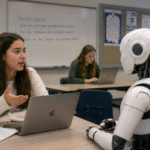
Beyond spotting deepfakes: Teaching multilingual learners to interrogate AI
Long before computers entered our homes and classrooms, photographs helped shape what people believed. Images carried a particular kind of authority: We did not simply look at them; we often treated them as evidence.

Financial education must not sacrifice student privacy
Financial education is gaining real momentum across the United States. More states are adopting mandates, more schools are adding graduation requirements, and more policymakers are acknowledging that students need practical preparation for the financial decisions they will face as adults.
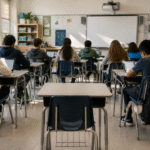
Attendance is the scoreboard–connection is the game
If I had been asked a few years ago, I would have told you that chronic absenteeism was a school system’s problem to fix. With better data systems, staff trained on outreach, and improved intervention protocols, school districts could move the numbers on their own.