
COVID-19 ushered forth a plethora of new safety guidelines and strategies intended to bring students and teachers back to the classroom as safely as possible. Indoor air quality has topped the list of school leaders’ concerns.
With students back in physical classrooms, air quality must take priority regardless of a district’s mask policy.
Join this eSchool News webinar to learn about:
- health and safety risks associated with impure air and the need to “up our game” in classroom air purification
- regulatory guidelines on indoor air quality and a practical guide to evaluating your present air purification system(s)
- your peers’ experiences going through a recent upgrade to fix air quality concerns

- In districts, reaching readiness, retention, and success - March 5, 2026
- AI use is on the rise, but is guidance keeping pace? - January 2, 2026
- 49 predictions about edtech, innovation, and–yes–AI in 2026 - January 1, 2026
More from eSchool News

5 keys to turn escape rooms into classroom inspiration
Have you ever been to an escape room? For those unfamiliar with the term, an escape room is a structured, problem-solving experience where participants are locked in a room and must use their wits, tenacity, and deductive skills to find a way out.

As classrooms go digital, are educators ready?
Today, about 80 percent of K–12 students use computers or tablets at school–up from about 50 percent before the pandemic. Even as parents worry about too much “screen time,” schools are ramping it up.
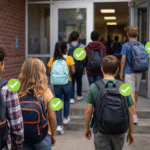
When it comes to student attendance, are districts measuring the wrong thing?
Across the country, schools are raising alarms about chronic absenteeism. News stories highlight rising numbers of missed days, legislators are demanding answers from districts, and educators are feeling the stress.

Nearly half of high school students now use AI in college search
AI is transforming the way students discover, evaluate, and choose colleges, according to a national survey of more than 5,000 high school students conducted by education company EAB.

The biliteracy advantage: How heritage languages boost English proficiency and workforce readiness
In just one academic year, Marietta City Schools in Georgia saw the percentage of elementary English learners (ELs) working in or above grade level rocket from 11 percent to 67 percent.

From high school to career: 6 CTE trends to track in 2026
Without a doubt, career and technical education (CTE) is priceless for high school students wanting to get real-world, hands-on job skills before they graduate and turn their interests into career paths.

Strengthening the PK-12 leadership pipeline during a succession crisis
Across the country, districts are confronting a growing PK-12 leadership pipeline crisis. Veteran principals, assistant principals, and district administrators are retiring at increasing rates, yet there is not a sufficiently prepared pool of aspiring leaders ready to step into these roles.

New partnership expands access to flexible career-connected learning
Microschools are small learning environments that typically serve a limited number of students and emphasize personalization and strong relationships. Often blending elements of traditional schooling, project-based learning, and community-based experiences, microschools allow educators to tailor instruction to individual student needs while creating a strong sense of belonging.

How location precision enhances safety and reduces response times in emergencies
In emergencies, time is the most valuable resource–and it’s often the one in shortest supply. Whether a medical crisis, fire, or security threat, the difference between a quick response and a delayed one can significantly shape outcomes.

AI didn’t break homework: It exposed what was already broken
Who among us has never copied a homework answer in a hurry? Borrowed a friend’s paragraph? Accepted a parent’s “small correction” that eventually became a full rewrite?