
COVID-19 ushered forth a plethora of new safety guidelines and strategies intended to bring students and teachers back to the classroom as safely as possible. Indoor air quality has topped the list of school leaders’ concerns.
With students back in physical classrooms, air quality must take priority regardless of a district’s mask policy.
Join this eSchool News webinar to learn about:
- health and safety risks associated with impure air and the need to “up our game” in classroom air purification
- regulatory guidelines on indoor air quality and a practical guide to evaluating your present air purification system(s)
- your peers’ experiences going through a recent upgrade to fix air quality concerns

- Children learn best on paper: We need better technology, not less of it - July 13, 2026
- In districts, reaching readiness, retention, and success - March 5, 2026
- AI use is on the rise, but is guidance keeping pace? - January 2, 2026
More from eSchool News

AI is stealing students’ ability to think critically–Journalism 101 may be an antidote
The risks of using generative Artificial Intelligence in education outweigh the benefits. That’s the warning in a seminal report from the Brookings Institution’s Center for Universal Education.
I run an edtech platform I hope you barely use
When we don’t confine learning to one classroom but share it across a department or district, we enable systemic change. Technology can facilitate this.
What 500 doorsteps taught me about getting kids back to school
I know the feeling when a letter from school shows up at the house. Nobody opens one of those smiling. Most of the time, the letter tells a family something they already know and nothing about what they actually need.

The power of one: How the school librarian can help schools do more with less
Technology initiatives, curriculum mandates, instructional frameworks, new programs, new platforms, new expectations, and professional development. Every year — and sometimes every month — something else is added to teachers’ plates. The result can be fragmentation, burnout, and a lack of focus.

Why learning can’t stop when the lesson ends
The lesson goes well. The student follows the explanation, works through problems with the teacher, asks a good question or two, and leaves feeling like the material finally makes sense. Three days later, facing a similar problem alone, they’re stuck again.
The future of educational equity isn’t just more resources–it’s more access to experiences
When we talk about educational equity, the conversation usually focuses on resources. Do students have highly qualified teachers? Updated textbooks? Modern science labs? Reliable internet access? Those are all important questions.
Vibe coding: 3 easy steps to classroom magic
No matter where you turn today, it feels as though people just can’t stop talking about artificial intelligence (AI). Suddenly it’s become a part of our workspace, our entertainment, the tools we use for shopping and paying bills, but perhaps most notably, it’s quickly found its way into our classrooms.
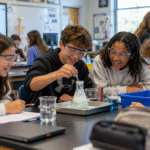
Helping students discover they belong in science
Growing up, science was my least favorite subject. That usually surprises people when they learn I’m a middle school science teacher. That’s the hard thing about science. The way we…

Year-round K-12 recruitment can win the talent pipeline and retention game
A recent report making national headlines reveals a stark reality: The “learning recession” that started well before the pandemic is still with us.
Standardize to sustain: Building a resilient K-12 technology strategy
A K-12 device purchase sets years of work in motion. Long after the procurement paperwork is signed, district teams are left to deploy, secure, repair, update, and eventually replace student and staff devices.